



How do you eat an oyster?
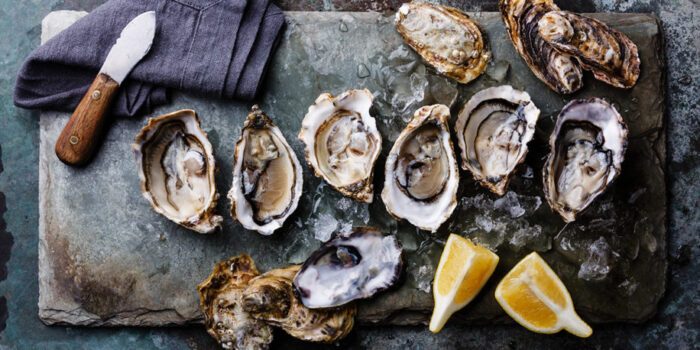
Oysters: either you love them, or you think they’re absolutely disgusting. Or perhaps you’ve never eaten them, which is also possible. In that case, we recommend giving them a try. Slimy and slippery? Just give it a go, then you can form an opinion afterwards. And if you remember the tips below, no one will know it’s your first time.

Know the differences
Although there are many different types of oysters, you can divide them into two groups: the flat oyster and the round creuse oyster. The oysters don’t look much alike, and they don’t taste alike either. The flat oyster is also considerably more expensive, because it takes much longer to grow.
In the Netherlands, you often eat an oyster from the Oosterschelde: this can be a creamy and briny Zeeland flat oyster, but also a Zeeland creuse with a seaweed-like flavour. We’re also very fond of oysters from France. We eat both Belons, flat oysters from Brittany with white flesh, and the French creuse. The latter variety is usually named after the region of origin or the way it was farmed. Think of Fines de Claires, the full-bodied and meaty oyster that is perfect for beginners. Also widely enjoyed: the creamy and mildly spicy Gillardeau and the meaty Irish oyster.
Open it
Often, this has already been done for you. If not, turn the oyster with the flat side facing upwards and insert the oyster knife where the two shells meet. Twist the knife to open the oyster. Don’t forget to cut through the adductor muscle as well. Fish expert Bart van Olphen explains how to do it once more in the video below.
Pimp it
An oyster is best enjoyed with a little lemon juice to give it a subtle sour touch, usually combined with a pinch of black pepper. It’s also delicious with raspberry vinegar and shallot. Don’t overdo the quantities—it would be a shame for the oyster’s flavour to disappear into the background. Have you never eaten an oyster? Then first try one without any extras.
Taste with your eyes
A good oyster should be opaque, but not grey. Ivory-coloured is best; that means the oyster has eaten plenty. It shouldn’t be too small either. The shell should be well filled—slurping up too much water isn’t pleasant. A dry oyster isn’t as it should be, either. Use your nose before putting the oyster in your mouth. A fresh oyster smells briny and like the sea; a bad one often gives itself away immediately with its rotten smell.
And now: time to eat
Loosen the oyster with a fork, bring the shell to your mouth and let it slide in. Swallowing the oyster immediately is, contrary to what you may have always thought, not the idea. Chew well, at least three times, so all the flavours are released. Those who taste carefully will recognise the meaty and salty ‘belly’ of the oyster and the somewhat firmer gills.
One extra fact: chewing for a long time also prevents the oyster from reaching your stomach alive (yes, oysters are still alive!). This can make you ill, because the oyster then starts secreting a fluid to defend itself.
What should you drink with it?
Although oysters can differ enormously in flavour, they have one thing in common: they all taste mild and briny. That calls for a fresh, young white wine that doesn’t overpower the flavour of the oysters. The grapes used to make the wine preferably grow on land close to the sea, for example in the Champagne region.
Also read:


