



Olive Oil Labels for Dummies
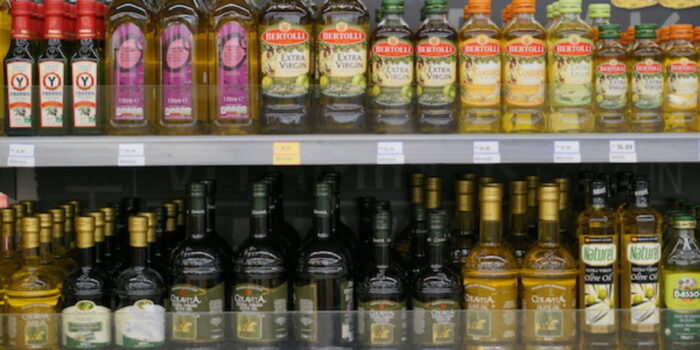
Choosing a good olive oil is quite a task. There are so many different types and brands. You could taste them all, but not everyone has time for that. And by taking a good look at the bottle, you can already get a long way. There is a lot of information written on the label. This is how you choose an olive oil without tasting it.

Extra virgin
If you use olive oil for dipping or in a dressing, always go for extra virgin. You shouldn’t fry in your beautiful oil either; that’s a waste and it doesn’t taste good at all. With extra virgin olive oil, you can taste the olives much better. That’s delicious when you use it raw, but when you fry with it, it tastes bitter.
Extra virgin olive oil is literally the juice of the olive. When you press an olive, oil comes out. This is called the first cold pressing. The oil is not heated and no chemicals have been added. After a second pressing, you get virgin olive oil. ‘Regular’ olive oil is a blend of extra virgin oil and processed oil.
Country of origin
The label on a bottle of olive oil is often written in Italian, but that doesn’t mean it is also an Italian oil. The bottle states where the oil really comes from. Italian oils even carry a D.O.P. quality mark, which you can use to recognize their quality. This mark means that the oil comes 100 percent from that region. A Tuscan D.O.P., for example, comes entirely from Tuscany. If the bottle says that the oil comes from the European Union, it’s bad news. That means it is a blended oil. You want a bottle containing only Italian, Spanish or Greek oil.
There is a big difference in taste between olive oils from different countries. Ultimately, it even varies by region and type of olive, but Italian olive oil is light and slightly grassy, Spanish is nutty, and Greek is strong and fruity. Which one you like best depends on what you enjoy most.
The bottle itself
Besides the label, you can also look at the bottle itself. Olive oil spoils faster when exposed to light. That’s why good oil comes in a dark-colored bottle: the producer doesn’t want it to spoil quickly. It’s therefore best to avoid the large glass tanks you sometimes see at specialty shops.
Also read:


