



Which rice goes with which dish?
I could happily eat rice every day. Cooked with lots of water until it becomes congee, served with my curry, deep-fried into arancini or, of course, as a dessert. But which rice do you use for which dish? We’ll explain.

Broadly speaking, rice is divided into long- and short-grain varieties. The shape and size of a grain affect how it should be prepared, as does the amount of starch it contains. That’s why you use a different rice for paella than for an Indonesian rice table. Here are the most common varieties at a glance.
Long-grain rice
Basmati
Basmati has a long, slender grain and an aromatic scent you would recognize anywhere. Once cooked, it is light and fluffy. Use it when making an Indian dish, such as this ultimate vegetarian curry with Indian cheese, or a Middle Eastern dish. For example, this delicious Arabian rice with chicken, almonds and raisins.
Jasmine/pandan
It doesn’t taste or smell like jasmine at all, but it does faintly resemble pandan. That’s why the Dutch also call it pandan rice. It originates in Thailand, so it goes perfectly with Thai dishes—how about this easy Thai vegan curry? But we also often use it with Chinese or Indonesian food. Because this rice is slightly stickier than basmati, make sure it has cooled and dried completely if you want to fry it the next day. We usually cook leftovers further with lots of extra water or stock to make delicious savory rice pudding.
Wild rice
It is actually the grain of a particular grass from North Africa, so it isn’t rice at all. The grain is long, slender and brown or sometimes even black. Its flavor is nutty and smoky, and the grain is much chewier than white rice. Delicious in salads.
Brown rice
With brown rice, the outer layer has not been removed—as it is with white rice—which means more fiber is retained. In fact, it is whole-grain rice. It is slightly nuttier and firmer than white rice, and can essentially be used as a substitute for basmati or jasmine when you want to make the healthier choice. Something we actually never do. I always say no to brown rice.
Short-/medium-grain rice
Risotto
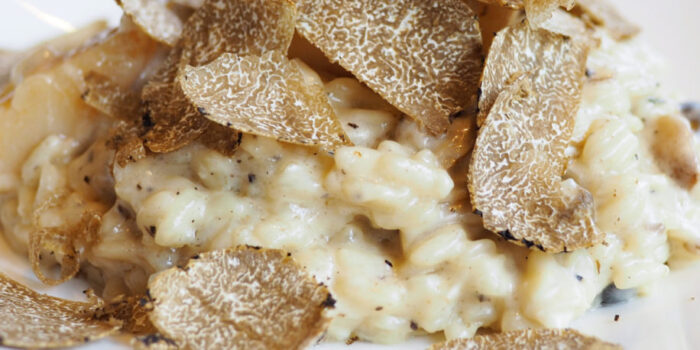
The most common grain used for risotto is arborio, named after the village of the same name in Italy. There is always a white dot in the center, and the starch content is high. Because the starch is released during cooking, risotto becomes wonderfully creamy. If you can find it, you can also use carnaroli for risotto. Make this delightful dish: Roberto’s saffron risotto. Its starch content is even higher, which helps the rice retain its shape while cooking.
Japanese rice
You’ll find it in the supermarket under the name sushi rice. This round-grain rice is also high in starch, which makes it stick together when pressed. Perfect for sushi or onigiri, of course, but also delicious as a side dish. Do you love sushi? Then try this sushi cake from Poké Perfect!
Paella
Bomba and calasparra are the best rice varieties for making paella, and both originate in Spain. The pearly white grain can absorb a great deal of liquid, soaking up all the flavors of the stock. And what do you make with this rice? Paella, of course! And these Caribbean paella and Israeli seafood paella prove that it doesn’t always have to be Spanish.
Sticky rice
It contains a great deal of starch, which makes the cooked result wonderfully sticky. It is widely served in Laos and northern Thailand, but also in Indonesia—where it is called ketan—and in China, where it is steamed in lotus leaves. Note: for many recipes, you need to soak the rice overnight first. So start in good time.
Dessert
Rice pudding, rice tart—when there is rice in a dessert, we’re automatically game. It is sold in supermarkets as dessert rice, but we usually just use risotto or sushi rice. You get a perfect result with those, too.
Read also:


