



5 fun facts about cappuccino
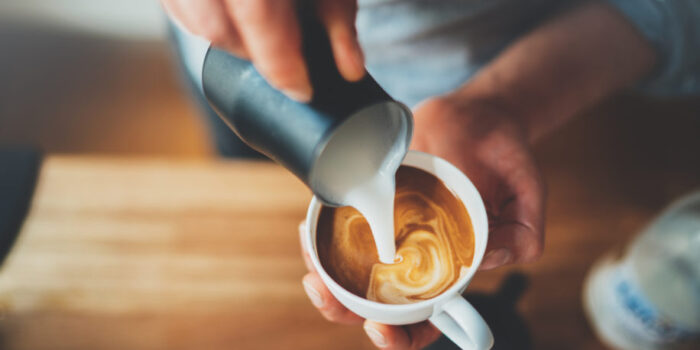
Apparently, now that we’re working from home, we move a lot less than we used to, when many people at least made regular trips to the coffee machine at the office. I was shocked by this news, because surely you drink plenty of coffee at home—exactly enough, right? You do start the day with a little cappuccino (or two, or three), don’t you? The drink of the gods, if you ask me. And did you already know these facts about it?

Because for something that has been a fairly ‘normal’ drink in the Netherlands for less time than, for example, black coffee, it’s already hard to imagine life without it. So, out of love for it, we’re happy to list these facts for you:
Laughed out of the room
Let’s start at the beginning: and that beginning really is the beginning of the day. If you order a cappuccino (or any other coffee with hot milk) in Italy after eleven in the morning, you’ll make a complete fool of yourself. In the Netherlands, of course, you should do whatever you want, but if you ever find yourself lucky enough to be carefree traveling and eating and drinking in that beautiful country again, consider yourself warned.
Breakfast treat
So if you order that cappuccino (with breakfast), you’ll want something to nibble on with it too, right? In Italy, people generally don’t do elaborate breakfasts with scrambled eggs, cereal, toast with butter or that kind of (delicious) nonsense. A traditional breakfast there consists of a cappuccino (or a macchiato or espresso), knocked back with a small sweet pastry such as a cornetto (croissant) or a few biscotti cookies for dunking.
Monk’s work
Making a perfect cappuccino is a very precise job in any case. But that isn’t necessarily where the name comes from. Stories about its etymological origin vary, but the most likely explanation is that the color of espresso with milk resembles the color of the robes worn by Capuchin monks. Another explanation: the milk forms a ‘hat’ or ‘hood’ on top of the espresso, comparable to the hood a monk can pull over his head.
Foam party
A great cappuccino naturally stands or falls with the quality of the milk foam. It should be velvety microfoam, with steam blown into it at exactly the right angle and temperature through the steam wand of the espresso machine. The foam must not exceed 70° C (after that, your cappuccino tastes like boiled milk—ughhh), which is why many milk pitchers for beginner baristas have a built-in thermometer. The idea is that you learn as quickly as possible to feel the bottom of the pitcher with your hand and know when it has reached that precise temperature between 65° and 70° C. Waited too long? You’ll feel it soon enough…
Willy Wortello
In 1902, the invention we now know as the espresso machine was presented. Luigi Bezzera came up with the idea, and the company La Pavoni was founded in 1905 to put it into production. It is still one of the world’s most famous brands when it comes to espresso machines. It’s hardly surprising that Bezzera came from Milan—the birthplace of delicious food and countless wonderful Italian-designed household objects.
Read also:
- These 9 things you need to know about espresso
- Foodnews Hit by corona: Nespresso suspends part of its production
- The roast of: coffee barbarian Steffi


