



5 reasons why you should buy an old Margriet cookbook
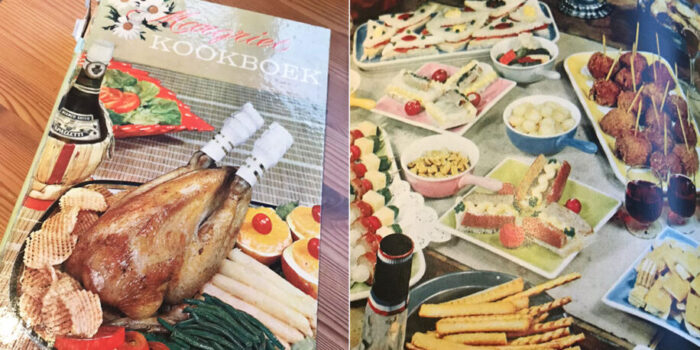
New cookbooks are published every day, each one even more beautiful than the last. And yet some classics turn out to be unbeatable. Is Jamie’s first book the one for you? Do you have Nigella’s or Donna’s entire collection? I swear by the Margriet Cookbook from the 1960s. Why?

My mother received the book when she got married, along with the Margriet Household Book. She had never shaped a meatball or trimmed a snow pea, so her mother thought a little explanation might come in handy. And fortunately, the Margriet Cookbook describes everything you could possibly want to cook, bake or roast. What’s more, most of the dishes don’t have a photo in the book, so if you mess it up, nobody will know. Her copy has been read to pieces, she used it so often. So when I spotted a nice copy in a second-hand shop, I took it home straight away. Why, actually?
1. Handy guidelines
‘A carelessly or inadequately set table cannot create the atmosphere required for a pleasant and harmonious gathering during everyday meals,’ it states very sternly on page 9. Then follow pages full of instructions on how to be a good hostess, how to set the table and how to receive guests. It has a strong Mad Men feel, which makes it all the more fun to read: ‘When serving hot dishes, support them loosely with your hand on the table, but do not bend too far forward and avoid collisions with the guests.’ Handy tip!
2. Food photography avant la lettre
Jamie and Donna could still learn a thing or two from the (few) photos in this book. Everything is brightly coloured, high-contrast, and the tables are without exception piled high. Devilled eggs in all their glory, skewers, canapés and delicious meatballs, all piled onto an overflowing buffet meant to represent the ideal setup for cocktail hour: it makes me hungry!
3. Recipes from the Pleistocene
Just after the last dinosaur had disappeared over the horizon, recipes such as ‘simple orange custard’ and ‘peat briquettes with berry juice’ came into being, and fortunately they appear in this cookbook, so that we don’t forget. And those are only the desserts! What do you think of braised cucumbers, prawns in aspic or a roast goose? You won’t find those in the hip cookbooks.
4. Notes in the margins
In my copy, a handy home cook has written her notes in the margins. Next to the recipe for Brussels sprouts she says that 45 minutes of cooking time is ‘a little too long’ (forward-thinking!) and writes that the apple pie dough shouldn’t be made with margarine. And next to the recipe for filled boterkoek, it simply says: ‘very delicious’.
5. Tables and things
An entire chapter on bottling and preserving. A table of seasonal fruit and vegetables. A food composition table. It’s all exceptionally thorough. I’ve never needed any of it, but it’s still nice to know it’s there.
Also read:
- Old-fashioned delicious asparagus from Grandma Kees
- An ode to ragout-filled pastries
- Avoid these 5 mistakes if you want truly delicious meatballs


