



7 tips for cooking safely
Whether you spend every day in the kitchen whipping up amazing things, or mainly use it to make microwave popcorn or heat up ready-made nasi goreng in a wok – caution is always advised. If you know where the risky spots and dangers in your kitchen are, you’ll also know what to check and how to keep things safe. How you handle certain gadgets or basics can also make the difference between safe and downright bloody, so read up here!

I once had the fire brigade at my kitchen table, but luckily only because they were going door to door in the street for a standard safety check. I got a pat on the back because the kitchen roll wasn’t near the gas stove, and they also left everyone a free smoke detector. Two good tips right there!
Have a look around your kitchen
This is where it starts. First, make sure the smoke detector works, and check (and take action) to see where a carbon monoxide detector would best fit in your home (if applicable). Make sure nothing near the gas stove or flames can flap around loosely, such as tea towels or the aforementioned kitchen roll. A loose rug looks nice, but is obviously a trip-with-a-full-pan-in-your-hands waiting to happen. Always make sure there’s good ventilation.
Before you start cooking
Make sure cupboard doors and drawers are closed (and remember to close them during cooking too). Tidy up, especially those parts of the countertop where you’ve made a habit of dumping chargers, paracetamol and empty glasses (guilty). Is the oven empty? No baking trays with baking paper still on them that could catch fire while preheating?
Children and pets: unpredictable little characters
Cooking with children can of course be fun, but if that isn’t the plan at that moment, keep a close eye on things. Isn’t a toddler crawling past just as you’re about to drain the pasta? (Obviously after removing a large mugful of pasta water for the sauce from the pan)… I don’t have any, but apparently cats also like to jump right onto your countertop while you’re busy handling something hot. Or simply run off with the spoils…
Don’t cook naked
Or do, if that’s your thing, but hopefully you’ll wear an apron that covers you from neck to toe. Even during sundress season: take extra care. There’s a reason kitchen staff always work in long trousers and sturdy shoes. Once you’ve spilled hot chicken stock over yourself or dropped your knife, you’ll have learned your lesson. Also watch out for long necklaces or loose, long hair.
Don’t set the place on fire
Seriously. Keep flammable things such as oil, textiles or paper packaging away from open flames. If you have something on the stove and need to leave the kitchen for a moment, set a timer. Even if it’s only for a few minutes. Above all, read this fire brigade article about pan fires very carefully and remember the basic rules: don’t add water, don’t carry the pan around, and do cover it with a lid or baking tray.
And don’t chop your fingers off
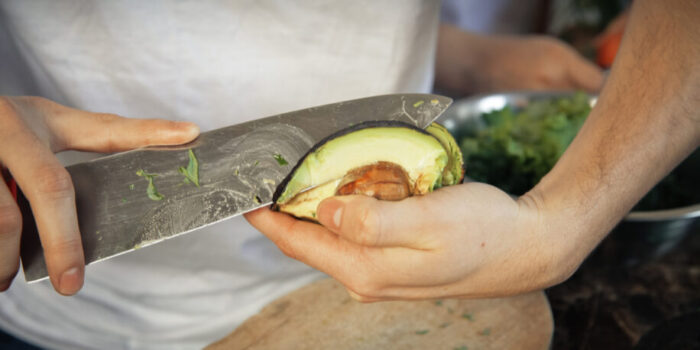
We’ve written before about good knives and how to handle them responsibly. Don’t store them loose in a drawer; keep them safely up high on a magnetic strip or in a knife block instead. Make sure they’re sharpened: blunt knives are more dangerous than sharp ones. Always cut away from yourself. Never hold something in the palm of your hand and cut down into it from above. Place a damp piece of kitchen paper or cloth under your chopping board so it doesn’t slide around.
You can’t beat a mandoline
That last little bit? That’s for the mandoline. Let it go. Don’t try to be a hero or suddenly become overly frugal. Those last three slices won’t make a difference anyway, not when they’re that thin. Always use the hand guard and say goodbye to the ends of the fennel, carrot, onion, whatever. Or use them to make stock!
Read also:
- People share their stupidest kitchen blunders and it’s painfully funny
- 13 times these people should never be allowed back in the kitchen
- 15 times everything went completely wrong in the kitchen


