


8 products that also contain the carcinogenic aspartame without you knowing it
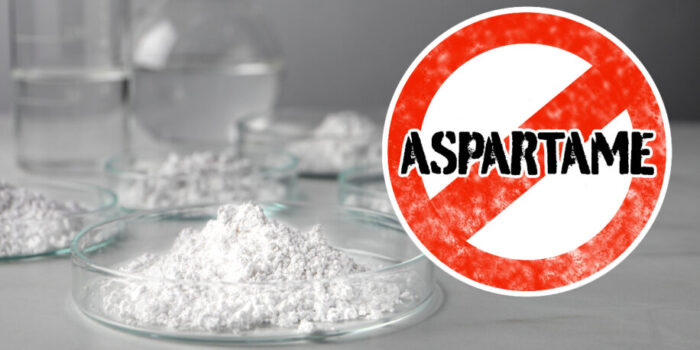
At first glance, aspartame seems like a miracle sweetener. It is 200 times sweeter than sugar, yet contains hardly any calories. However, the International Agency for Research on Cancer (IARC) of the World Health Organization came to a firm conclusion: aspartame could be linked to cancer. Not good news, especially since the substance is still found in a great many products.

For years, scientific studies have shown that aspartame is associated with cardiovascular disease and type 2 diabetes. The IARC study linking aspartame to cancer is in line with this. Food watchdog Foodwatch is raising the alarm. Because why is a substance that may be linked to cancer allowed in so many products? We are talking about thousands of products that you and I can simply buy at the supermarket.
8 more products containing aspartame
Aspartame’s properties—sweet and low in calories—mean that you often find the substance in sugar-free products. You already know, of course, that aspartame is the sweetener in Coca Cola Zero and Coca Cola Light. The same applies to all other types of sugar-free soft drinks. But did you know, for example, that you can also find aspartame in the following products? Quark, sushi ginger, beer and table sauces, for example..
1. Sugar-free candy
It has been a trend for years: sugar-free candy. Eating sweets without consuming sugar? The dream. In many cases, the sweet taste of candy is replaced with aspartame, which is less good news.
2. Sugar-free throat lozenges
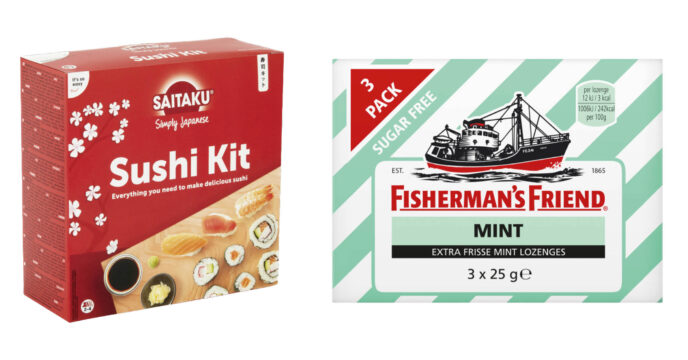
The dividing line is thin in this category. Some people will classify throat lozenges as ‘candy’, while others may consider them a separate category. Many throat lozenges are sweet and refreshing, but they are not typically candy like chocolate or wine gums. Debatable, then. What is not debatable is the fact that sugar-free throat lozenges also often contain aspartame. Take Fisherman’s Friend, for example—the sweet that turns your mouth into an ice cube. The sugar-free mint version contains aspartame. You probably didn’t know that, did you?
3. Sugar-free chewing gum
Well, following the same line of thought: you can just as easily find aspartame in sugar-free chewing gum. Just look at the packaging of Mentos Gum Pure Fresh – Freshmint Sugarfree. The word ‘sugar-free’ should set off alarm bells anyway, no matter what kind of product you are holding.
4. Powdered drink mix/syrup
I have the feeling that it used to be—read: 20 years ago—much more normal to give children a glass of lemonade. We probably didn’t know any better back then. But water diluted with powder or syrup really is unhealthy. The large quantities of aspartame are an important reason why.
5. Sweetener tablets
For a long time, sweetener tablets seemed like the ultimate alternative to sugar in coffee. Fewer calories, but a sweet addition to the bitter stuff. Ideal! If only sweetener tablets weren’t also packed with aspartame. For example, those made by Candarel and NutraSweet. That’s a bitter pill to swallow.
6. Sugar-free jam
Jam without sugar sounds appealing, but in some cases producers choose aspartame as a substitute. So check the packaging of your jar of jam carefully.
7. Low-calorie yoghurt
Watch out: low-calorie yoghurt sounds appealing, but it may well contain aspartame. The same applies to high-protein dairy products—although in this category, you should ask yourself anyway whether you really need it.
8. Sneaky: in your sushi kit
Think you are going to surprise your loved one with a romantic evening making sushi, only to serve your lover the carcinogenic substance aspartame! Yes, Saitaku’s sushi kit—which you can find at both Jumbo and Albert Heijn—contains aspartame. Specifically, it is in the sweetened ginger. Now you know.
Sugar-free? Alarm bells!
The list could really go on. If you see ‘light’ or ‘sugar-free’ on a package, alarm bells should already be ringing. There is a good chance it contains aspartame. Foodwatch is preparing a petition for a ban on aspartame from the European Commission. Because although the European Commission knows that aspartame may be carcinogenic, policymakers still continue to look the other way. Notably, EU regulations state that ”only additives proven to be safe may be permitted in food products”.
Noteworthy: this is what the Voedingscentrum says about aspartame
The Voedingscentrum says that people are being made ”unnecessarily afraid” of aspartame, also known as E951. According to the organisation, the claims are ”based on incorrect conclusions or poorly conducted research”. For example, they may refer to quantities of aspartame that you could never consume all at once as a user. Still, it does not seem logical to doubt the IARC’s research. So wouldn’t it be better to err on the side of caution?
You can find more information here about aspartame and Foodwatch’s petition (almost 250,000 signatures have already been collected!).
Also read:
- Stop: you’re better off not putting these 8 things in your healthy smoothie
- 13 supermarket ketchups tested: this is the winner
- 10 Coca-Cola flavours that have (sadly) disappeared from the shelves
Sources: Foodwatch, the Voedingscentrum, Albert Heijn, Jumbo


