


Foodwatch: food producers must stop shrinkflation now
Shrinkflation is still in full swing, according to research by Foodwatch. And the food watchdog has well and truly had enough of it. To restore purchasing power and protect consumers, they believe legal measures must be introduced as soon as possible. Hear hear!

Do you feel like you suddenly get through a bag of crisps much faster—and no, not because you’re reaching into that bag more quickly? And did you recently notice that your chocolate bar is considerably smaller than it used to be? That’s shrinkflation. Manufacturers and producers reduce the contents or packaging, causing the price per kilo or litre to rise sharply. So you pay more for less. Sounds lousy, and it is. As a consumer, you’re essentially being misled. And that at a time when many households are struggling financially. Did you know that research by Deloitte, Nibud and Leiden University shows that as many as 6 in 10 households have difficulty making ends meet?
No transparency
Foodwatch is keeping a close eye on this. According to them, the major problem—and the major rip-off—is that companies are not transparent about shrinkflation. Packaging always displays claims such as ‘Now: 10% more contents!’ or ‘Greatly reduced in price!’, while reductions in packaging or price increases are never mentioned. Understandably so, because what consumer would reach for a product with a message like that on the packaging? It’s simply unfair that consumers are not informed in any way about negative changes to the product. You only find out yourself, by checking the product’s contents and price.
Foodwatch’s shrinkflation research
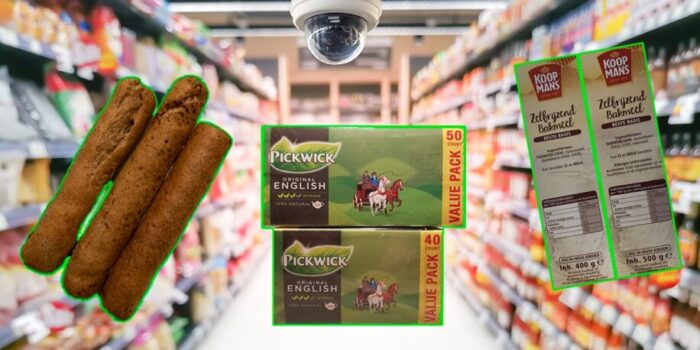
In August 2023, Foodwatch, together with its vigilant supporters, checked the prices and contents of various products. Foodwatch campaign leader Frank Lindner says the following about the research: ‘The shopping cart containing fifteen newly investigated food products became 15% lighter in six months, while consumers had to pay 34% more for it.’ The shopping cart included, among other things, a bag of Bertolli pasta sauce, Piccante flavour. It used to contain 500 grams and now contains 460 grams, representing a 90% price increase per kilo. A bag of Knorr Natuurlijk lekker chili con carne mix used to contain 64 grams and now contains 47 grams: a quarter less. And while a box of Ola Calippo Minis used to contain 6 pieces, it now contains just 5.
Outrageous
What makes it all even more unfair: food producers such as Unilever and supermarkets are still making enormous profits. Yes, the prices of raw materials, energy and labour have also risen for them, but how can their profits continue to increase so dramatically? According to Foodwatch, this is almost impossible to justify to consumers. They even call Unilever’s behaviour ‘outrageous’.
France
According to Foodwatch—and all consumers—food producers must therefore stop shrinkflation. But it isn’t quite that simple yet. The Netherlands Authority for Consumers and Markets (ACM) does not consider shrinkflation a legal violation. They do believe, however, that producers could provide consumers with clearer information. If anything about a product’s contents changes, the producer should clearly state this on the packaging. Can’t the government really exert more influence here? Can’t The Hague take an example from France, where the government is forcing manufacturers and supermarkets to lower their prices? Honestly, it simply isn’t acceptable that more than half of Dutch households are struggling so much to make ends meet. Something needs to be done about this as soon as possible. Preferably yesterday rather than today.
Would you like to do something yourself? Then join Foodwatch’s protest email campaign. This allows you to demand that manufacturers and supermarkets clearly state information about changes to the contents or price on the packaging of their products. And not in tiny print in a corner on the back of the box, but clearly visible on the front.
Also read:
- 15x packaging designs so misleading, they’re almost criminal
- Greedflation is a thing, and we’re not happy about it
- This TikTok shows how we’re being misled in the supermarket
Source: Foodwatch


