



9 cooking terms you need to know
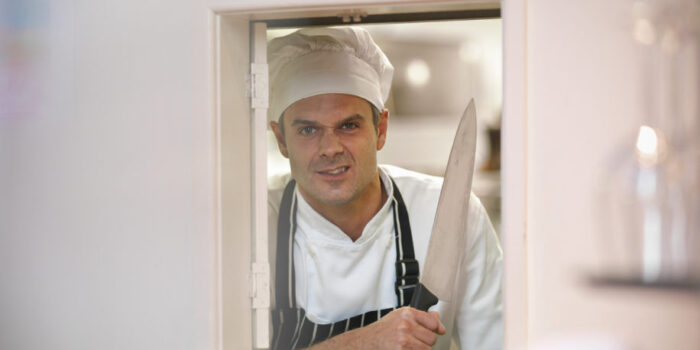
Meeting tigers want to get something in, tick it off and get things moving, on construction sites they work with a crocodile clip, rat-tail file or horse dick (seriously!) and professional chefs have their own jargon too. Do you know what chefs mean by sautéing, MEP or WUPS in the kitchen? Pay attention and take notes, then you can join in as if you know what you’re talking about.

Sautéing
Easy: clicking a switch from ‘off’ to ‘on’. Well, well, is that really so difficult? Wrong: by ‘sautéing’, chefs mean briefly frying or searing something in a little oil or butter. You can also hone a kitchen knife, but not in the pan with a little butter—along a honing steel instead: honing means removing burrs, small bulges, along the knife’s edge.
Brunoise
You can cut vegetables in various ways. If you cut a carrot brunoise, you end up with small cubes of about 3 mm on the cutting board. You can also cut julienne, which means 3 mm-thick sticks, and chinoise, a kind of diamond shape. Practice, practice, practice—that’s the only way to learn.
Cuisson
The doneness of fish or meat. Steak, for example, can be prepared anywhere from bleu (very rare) to bien cuit (well done), depending on the guest’s taste and the chef’s mood. If the doneness is perfect, you say ‘beautiful cuisson’.
MEP
Short for Mise En Place, the preparation. In the hours before the restaurant opens, the entire kitchen crew is busy slicing, chopping, roasting and steaming to ensure that everything runs smoothly during service, when guests are in the restaurant.
WUPS
It sounds voluptuous and bouncy, but it’s an abbreviation for the standard flavorings used in soups and sauces: carrot, onion, leek and celery. Also called mirepoix. There’s also fatty mirepoix, which includes bacon. Another abbreviation: Pezo. That is… pepper and salt. You only get it once you get it.
Sautéing
Turn the heat up, put a frying pan on it and add a little oil or butter. Then fry meat, fish or vegetables in the pan while keeping them constantly moving, for example by shaking the pan. Try to look very cool while doing this—that’s part of it. Special sauté pans exist, vaguely resembling a shallow frying pan (OK, actually quite a lot), and they make shaking the food easier without half of it ending up on the stove. Also contributes to the cool factor.
Stove
And that stove? As a pro, you call it the ‘stove’. Check.
Clearing
Clearing the table. OK, that’s a job for the serving staff, but it’s also a source of heated arguments with the kitchen crew. Because does properly clearing mean removing everything from the table and dumping it by the dishwashing area, or should the front-of-house team also scrape off the leftovers, put the cutlery in a separate container and stack everything neatly? Best of luck!
Tranching
Simple: cutting into slices! Used mainly for meat and fish; you’re not likely to tranche a cucumber.
Read also:
- 10 tips from chefs to make you better in the kitchen
- Cooking school: how to make the perfect pan sauce
- Cooking school: you can learn to flambé


