


Albert Heijn against food waste: Yesterday’s bread, Waste-not bag and Dynamic pricing
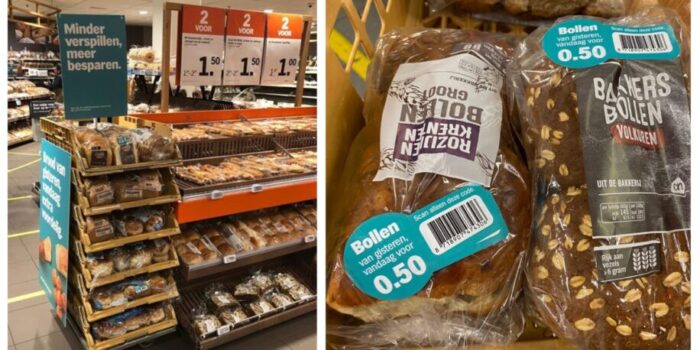
Some time ago, Albert Heijn launched a pilot selling yesterday’s bread. And now, during the nationwide Food Waste-Free Week, the supermarket is announcing even more initiatives to combat food waste.

Bread is one of the most wasted products and is also the theme of the nationwide Food Waste-Free Week, which starts today. At the moment, ‘Yesterday’s bread’ is already available at Albert Heijn in more than 40 stores, but it is now being rolled out nationwide. Bread that was delivered fresh to the store yesterday and was not sold that day is sold the next day until 11 a.m. at an extra-low price. Half a loaf costs 25 cents, while a whole loaf and a bag of rolls cost 50 cents.
Old bread for toasties and more
I regularly buy bread from the previous day at Albert Heijn; you can make delicious toasties with older bread, but homemade croutons, for example, also taste better with old bread. Albert Heijn also offers tips; during Food Waste-Free Week, various loaves will feature stickers with tips and recipes for using old bread. Allerhande and recipe cards in the store also contain various tips on what you can make with leftover bread.
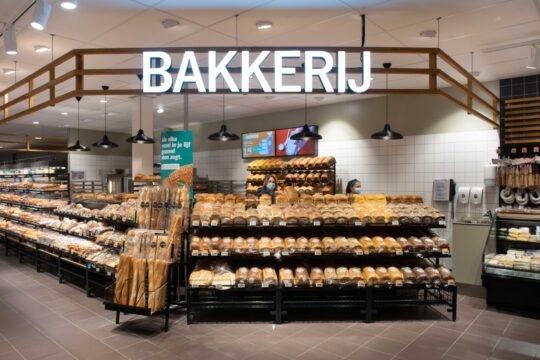
Waste-not bag
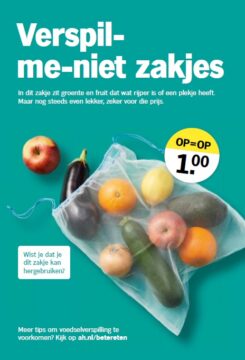
In addition to Yesterday’s bread, Albert Heijn is also introducing the ‘Waste-not bag’ this week at 12 Albert Heijn stores (Capelle aan den IJssel, Groningen, The Hague, Hoofddorp, Hengelo, Assen, Amsterdam, Echt, Tilburg, Heemskerk and Tiel). For 1 euro, you get a reusable produce bag filled with fruit and vegetables that are a little riper or have a blemish, but are still tasty. All bags available that day can be found in the fruit and vegetable section. If successful, Albert Heijn plans to offer the Waste-not bag in more stores.
Even more discounts
And I’m happy to take anything with the 35% discount sticker too, because I hate throwing food away, especially when it is still perfectly good and tasty. But that discount can be much higher (up to 70%), because Albert Heijn is introducing the digital ‘dynamic pricing’ solution (currently used for meat and chicken) in more stores.
How does it work? With dynamic pricing, an algorithm automatically calculates the best discount so that no unsellable products remain at the end of the day, thereby reducing food waste. The algorithm takes into account factors including location, Bonus offers, weather conditions, historical sales data and in-store stock. The precise discount is automatically displayed on the electronic price tag. This week, the number of stores using dynamic pricing will be expanded to around 130, and hopefully to more product categories in the future.
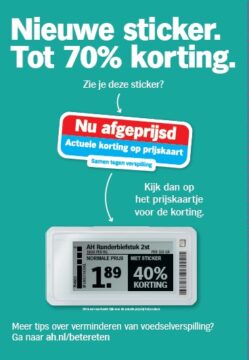
Image: Albert Heijn, Yasmin Hargreaves Photography
Also read:
- Albert Heijn vegetable garden: fear of pointed cabbage and radioactive buckwheat
- Albert Heijn stops offering plastic bags in the fruit and vegetable section
- OH YES: Albert Heijn is now selling tompouce donuts


