


Be careful if you think you’re buying lean minced meat
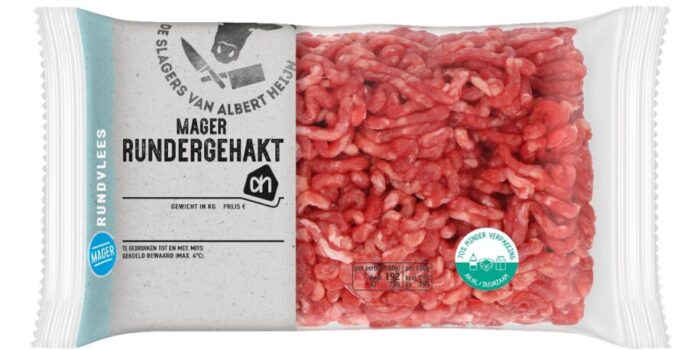
Research shows that lean minced meat from the supermarket often isn’t lean at all. There you are, with your good intentions. As far as we’re concerned, you don’t have to eat so lean at all, as long as you simply maintain a sensible eating pattern in which you don’t occasionally deny yourself something fatty, but sensible choices predominate in life. Right, having said that, suppose you do want to choose lean minced meat in the supermarket – what should you look out for?

The fat in minced meat is saturated fat, which increases the risk of cardiovascular disease, rather than one of the healthy unsaturated fats your body can put to good use, such as the fat in nuts, avocados and oily fish. But if confusing legislation misleads you, how can you make sensible choices? The Consumers’ Association investigated the matter.
Not all minced meat is the same
First of all, it’s useful to know that there is a difference in definition between ‘minced meat’ and ‘mince’, and both are official terms with a distinction made by the Dutch Commodities Act. Minced meat is the name for pure, unadulterated, ground meat without additives. Under European guidelines, minced lean meat may contain a maximum of 7% fat.
As soon as even one simple addition is made to minced meat (lean or otherwise), for example a few drops of water, it is immediately no longer considered minced meat but falls under the definition of mince. And then the European rules no longer apply; instead, the Dutch rules take effect, reports Consumentengids.
Its own rules
Under Dutch rules, ‘lean mince’ may contain more than twice as much fat as ‘lean minced meat’. So as soon as the step is made from ‘lean minced meat’ to ‘lean mince’ by adding something as simple as a few drops of water or flavouring, fat may immediately be added in the Netherlands too. Adding fat makes it cheaper for the manufacturer, but as long as it stays below the Dutch guideline of 15% fat, it is still considered ‘lean’ beef mince. For comparison: pork spare ribs contain 14.5% fat.
Get it from the butcher
So it’s good to know this, and important to read the labels if you want to buy lean mince at the supermarket. Where can you actually get lean mince, according to Consumentengids? At the butcher’s, in any case, says the guide. They also investigated this in 2017, and at every butcher’s they visited, the regular (!) mince contained less fat than the mince supermarkets sold as lean.
A few supermarkets did come out as sellers of lean mince and were therefore mentioned in the guide: Aldi, Lidl, Marqt and Spar. Even so, these ‘lean’ brands also contained more fat than the 7% permitted in lean minced meat under the European guideline.
The conclusion? Reading Consumentengids is always a good idea, as is reading labels in the supermarket. Make sensible choices whenever you can. And for a truly good Bolognese sauce, leave lean mince on the shelf anyway. Choose a beef-and-pork blend, and if you don’t eat meat at all, the good news is that vegetarian mince from the supermarket often contains less than 1% fat.
Also read:
- Hold on, fresh mince isn’t fresh at all
- Consumentengids: the information on alcohol labels should be much more transparent
- Foodwatch launches legal action over ‘pink slime’
Source: Consumentengids, image: Albert Heijn


