



Beware: don’t fall for these 5 misleading tricks on food packaging (ever again)
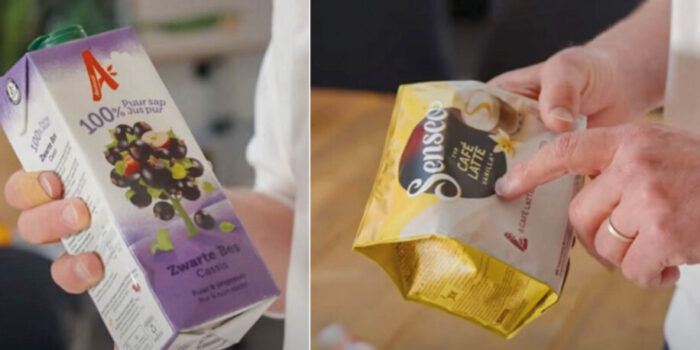
Everyone who regularly does the grocery shopping falls for them. You are lured by attractive packaging, glowing words and uplifting claims. Food manufacturers and supermarkets are constantly using misleading and fraudulent tricks to sell their products. But how can you avoid falling for these marketing tricks? Once you see through these 5 misleading tricks, you won’t fall for them again!

5 misleading tricks on food packaging
1. The use of lure ingredients
They are displayed prominently on the front of a food package (in images and words), but when you look at the ingredients on the back, the main ingredient is often present only marginally. Matcha iced tea with 0.007% matcha. Truffle cream cheese with 0.07% truffle, cranberry soft drink with 0.5% cranberries… But also Appelsientje Blackcurrant with a much smaller proportion of blackcurrant (20%) compared with apple and grape juice (78%, from concentrate!). Beware: you are being lured by ingredients that are present only in minimal amounts.
2. “Flavour” is a nice word for artificial flavouring
“Flavour” (and all its derivatives) is a major red flag. More specifically: the flavouring alarm! When a manufacturer puts flavour on the front, it very often means that—usually artificial—flavourings have been used. The “main flavour provider” does not even have to be present in the product. The flavour is an approximation, a translation by the producer. So bacon sauce without bacon, coconut syrup waffles without a trace of coconut, vanilla coffee pods without a hint of vanilla… don’t fall for it.
3. Nutritional and health claims
Food manufacturers very often highlight their product’s positive qualities in huge lettering on the front of the packaging. They would rather keep the disadvantages out of sight. So be very careful with products labelled: “Rich in fibre”, “Source of calcium”, “With vitamin B12”, “With extra protein”… The product often also contains “extra large” amounts of other things: sugar, salt and/or fat. For example, spiced cake bars labelled “source of fibre”: these bars may look healthy, but they are real sugar bombs…
4. Shrinkflation & skimpflation
Everything manufacturers do to pass higher costs on to consumers (and safeguard profit margins for shareholders). Less content for the same unit price, often at a much higher price per kilo or litre. Expensive ingredients replaced with cheaper alternatives. And all of this often by adding a stamp or sticker saying “New recipe”, “Now even better”. For consumers, these are signs that the food product has usually become better mainly for the manufacturer itself. One example: Knorr vegetable wraps have become one-third smaller in size, while the price per kilo rose from 8 euros to 11 euros. Outrageous!
5. Fresh, artisanal, pure, local, natural, traditional
Blah blah blah; all claims and words for show. Nothing more and nothing less. There are no statutory rules defining what is and is not allowed for “fresh”, artisanal, pure, local, natural and traditional. So don’t be surprised to find 15 E-numbers, such as potassium sorbate and sodium benzoate, in an artisanal crab salad (sold at Jumbo). Which artisanal chef cooks with those? What’s more, it contains more rapeseed oil, water, surimi and egg than crab meat (only 9%). Well then…
Read also:
Source: Foodwatch


