



Keuringsdienst van Waarde investigates: the double standard for baby food
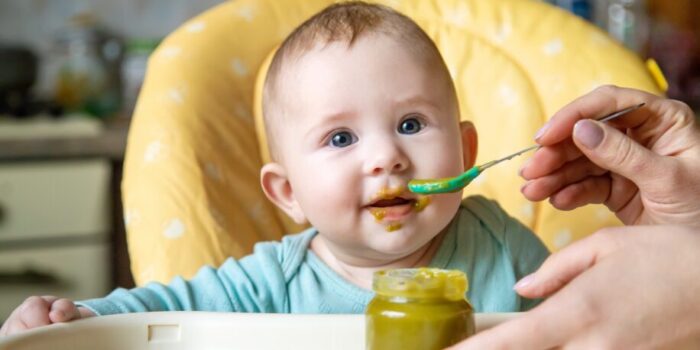
Parents only want the best for their little sprout. The same goes for nutrition. Supermarket shelves are packed with jars, cartons and pouches of baby food, full of vegetables and fruit. That baby food is subject to extremely strict European regulations. But there are quite a few double standards when you compare these with the regulations for regular fruit and vegetables. What exactly is going on? Keuringsdienst van Waarde investigated.

The labels on jars of Olvarit say that the vegetables and fruit in the jars come from special… baby fields (?!) According to Olvarit itself, these are fields surrounded by nature and not located next to polluting motorways. Honestly, had you ever heard of baby fields? Neither had Keuringsdienst van Waarde. It raises quite a few questions, and therefore calls for thorough investigation.
Strict list of requirements
When it comes to baby food for children aged 0 to 3, there are strict requirements for the ingredients in the jars and pouches. These are based on EU legislation. There is a long list of standards for pesticides and heavy metals in raw materials used in baby food. It specifies the maximum levels that raw materials must remain below. These levels are strictly monitored. If the vegetables and fruit do not meet them, they may not be used for baby food. They can, however, still end up in the supermarket.
Not in the jar, but on the shelf
That is where the problem lies. In the supermarket, you can therefore buy vegetables and fruit without any problem, and then use them to make baby food yourself. Have you ever seen a warning on a package of carrots? Me neither. Even though you might think that making food yourself would be better for your child. But the legislation on vegetables and fruit for baby food is simply much stricter than that for regular vegetables and fruit. For example, the permitted pesticide levels for spinach in baby food are 5,000 times lower than those for regular spinach. An absurd difference. Also think of the ‘children’s fruit’ that is heavily contaminated with pesticides in the supermarket…
Extra caution
The requirements for baby food were drawn up following extensive studies and analyses. Stefan de Keersmaecker of the European Commission explains this in the episode of Keuringsdienst van Waarde. You want to be ”extra cautious” and take ”as few risks as possible” when it comes to young children aged 0 to 3. This seems to be primarily about precautionary principles. Because according to toxicologist Martin van den Berg, even more research simply needs to be done. Although it is known that children’s brains can be affected when they inhale pesticides. This can, for example, lead to concentration problems.
So what about pregnant women? There are no rules for them, after all. Even though the fetus is at least as vulnerable when it comes to toxic substances…
What should you choose?
The fact that there is still a great deal of confusion and uncertainty becomes clear at the end of the episode. According to Wilke van der Vossen of the Netherlands Nutrition Centre, you can perfectly well make your own baby food from vegetables and fruit from the supermarket. ”There are regulations governing that too, so it is simply safe.” Well, safe… if there is one thing we have learned in recent years, it is that its safety is rather questionable (remember the blueberries?) So there is no real clear answer to the question of why those strict standards apply specifically to baby food. It all seems to be based on ‘just to be safe’.
Toxicologist Martin van den Berg advises against making your own baby food from regular vegetables and fruit, at least during a child’s first year of life. If you do want to do so, it is better to choose organic vegetables and fruit. Far fewer pesticides are used on these than on regular vegetables and fruit.
And, um, do baby fields really exist? Vegetable grower Tom Saat says they do and shows his ‘baby field’ in the episode. ”Entirely different criteria are applied here than to vegetables and fruit intended for the supermarket.” Baby food manufacturer Sjoerd Henstra—who also speaks in the programme—has never heard of them. ”This must be a marketing term.” So that remains somewhat of a mystery.
Read also:
- Keuringsdienst van Waarde investigates: this is how slices of supermarket cheese are made (and it’s not very good)
- Keuringsdienst van Waarde: this is how you get ripped off with nuts in the supermarket
- It has been researched: unborn babies vomit at the smell of kale
Source: Keuringsdienst van Waarde


