


Buying pandan rice: you’re often in for a disappointment
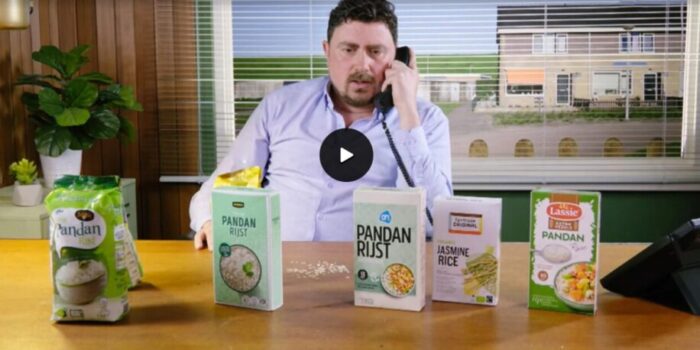
Cooking rice may seem simple, but it certainly isn’t. To make that perfect bowl, you need to ensure that you don’t make these mistakes and use the right type of rice. Pandan rice is one of the best-known varieties in the Netherlands. Yet this type of rice isn’t what it seems, as research by Keuringsdienst van Waarde has shown.

Because although you can find different varieties in the rice aisle, pandan rice isn’t one of them. Research by the programme shows that pandan rice is mainly a brand name.
Pandan in rice?
It may be useful to take a step back, because what exactly is pandan? Pandan is a long, narrow leaf that comes from the screw pine. You can make all kinds of delicious things with its extract, such as this pandan tompouce, for example. But what does pandan have to do with rice? Manufacturers claim that pandan rice tastes of pandan because it supposedly absorbs the flavour of the screw pine through its roots, but that is complete nonsense.
A rice variety with its own DNA
To investigate this, the rice variety must have its own DNA, as jasmine rice does. This fragrant, aromatic rice is therefore often found in a packet or bag of pandan rice. Rice sellers should therefore actually mean jasmine rice when they say pandan rice. But you may only call it jasmine rice if it consists of at least 80 per cent jasmine rice (the remainder may be other rice).
Jasmine rice from the supermarket
Yet many brands fail to meet this requirement too, research by Keuringsdienst has shown. Of the nine brands examined, six contain less than the 80% they promise.
- G’woon pandan rice: 5.0 per cent jasmine rice
- Albert Heijn pandan rice: 5.0 per cent jasmine rice
- Unirice parfume jasmine: 58.0 per cent jasmine rice
- Jumbo pandan rice: 62.0 per cent jasmine rice
- Sawa pandan rice 73.0 per cent jasmine rice
- Silvo pandan rice 73.0 per cent jasmine rice
- Lassie pandan rice 83.0 per cent jasmine rice
- Tilda jasmine rice 92.0 per cent jasmine rice
- Plus pandan rice 97.0 per cent jasmine rice
So the pandan in pandan rice is nowhere to be found, and the claimed jasmine rice designation isn’t justified either. It is difficult to determine what type it actually is because this rice has no unique DNA. The suspicion is that it is mainly cheap white long-grain rice, something sold in supermarkets as long-grain rice or white rice and available at a much lower price.
Avoid disappointment and know what you’re buying
When it comes to grocery shopping, we don’t want surprises. We want to know that we’re getting value for our money and that what’s stated on the label matches what’s inside. With brands such as G’woon and Albert Heijn falling below the 80% threshold, it’s time to take a closer look at your choices. If you trust a brand’s promises, you shouldn’t be faced with disappointment when opening your packet of rice.
Want to know more about the deception surrounding pandan rice? You can watch the full episode here.
Also read:
- This one ingredient turns fried rice into a world-class meal
- This trick for reheating rice is incredibly simple and rather brilliant
- Recipe for the most delicious spareribs of your life
Source: Keuringsdienst van Waarde


