



Capers: what are they and how can you use them best?
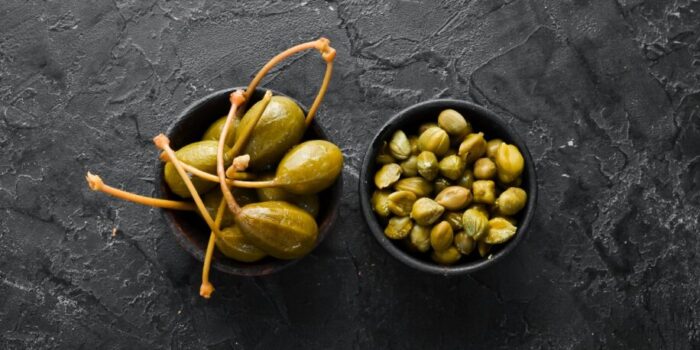
Small sour bursts of flavor that give countless dishes an extra kick; capers are real flavor boosters. But where do those little green balls actually come from, and how can you use them best in the kitchen?

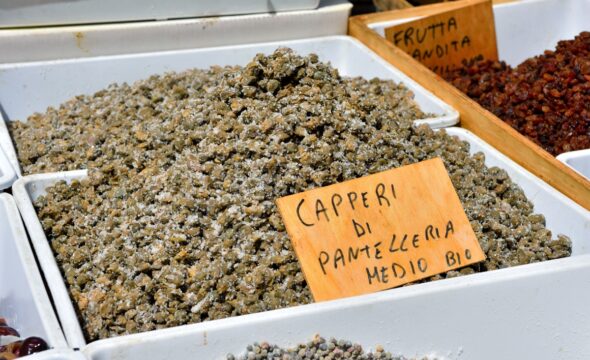
Capers don’t grow on a tree or in the ground but on a shrub, the caper bush. The caper bush has been around for thousands of years and grows mainly in warm Southern European countries such as Spain, Italy and Greece. The very best capers grow in the volcanic soil of the small Italian island of Pantelleria, between the Sicilian and Tunisian coasts.
Pantelleria: caper island
From Trapani airport in Sicily, you can fly there in a small propeller plane in less than an hour. If you can land, that is, because the notorious sirocco, the southern wind that carries hot, dry air from the Sahara northward, can make it quite windy on Pantelleria. It regularly happens that all air traffic is suspended. The island, with approximately 8,000 inhabitants, is therefore closer to Africa than to Europe. The Mediterranean summers and mild winters, scarce rainy days and an almost permanent sea breeze mainly leave room for crops that grow close to the ground. A lot of capers are cultivated there, earning the island the nickname ‘caper island’.

Capers: unopened flower buds
Capers are the unopened flower buds of the shrub. These buds are picked by hand before the flower opens. Capers and caper berries—you know, the larger version of the caper—are not the same, by the way. Caper berries are the fruits of the plant, not the flowers, and are picked later in the season. There is not really much difference in taste, except that capers may have a slightly sharper flavor. The leaves of the shrub are edible too. For example, you can fry them in a pan with olive oil and garlic.
Large or small?
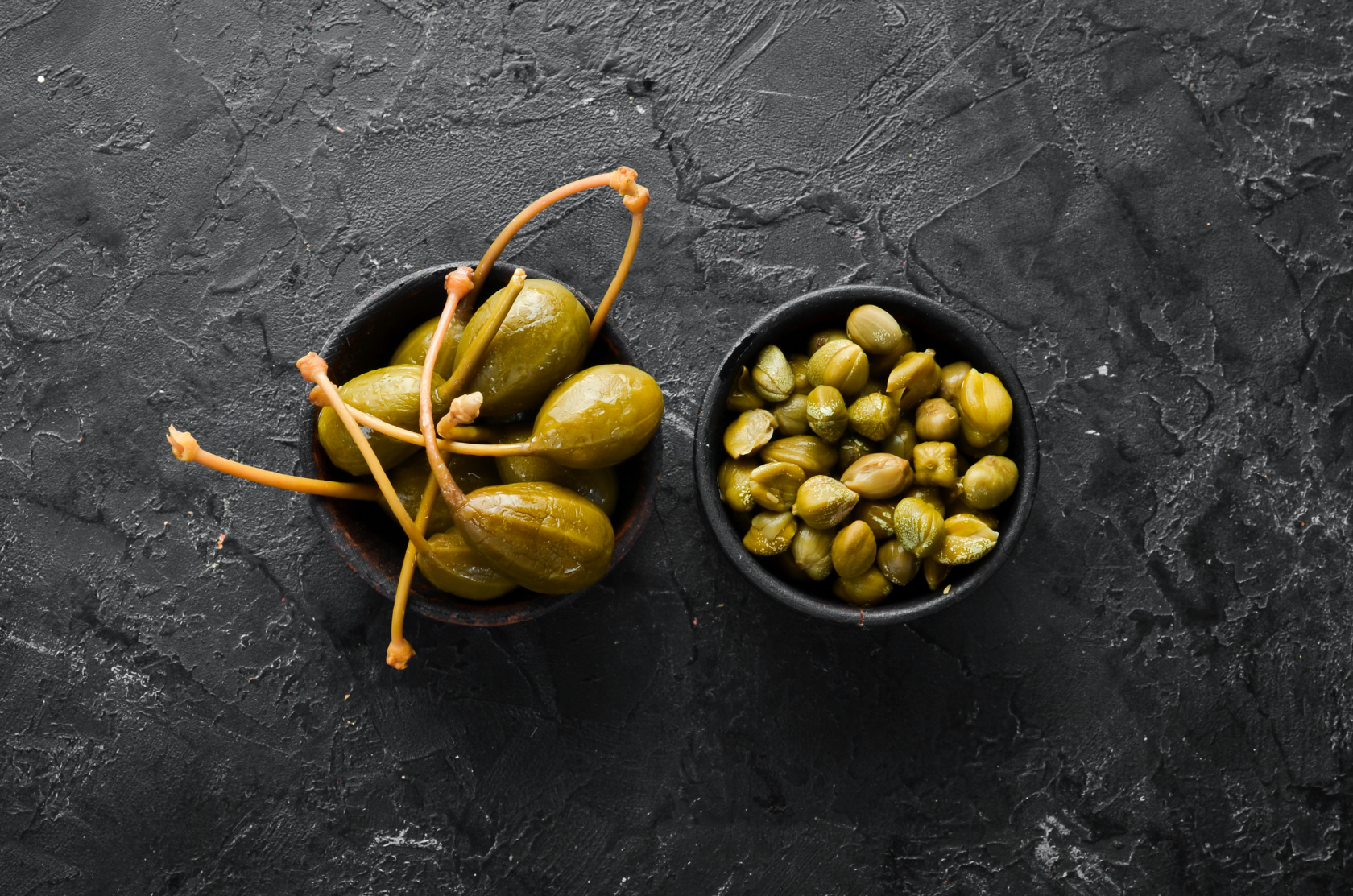
Connoisseurs on the island of Pantelleria prefer large capers, because this is where the flowers’ aromas are most developed. Small capers are often said to taste better because they are more expensive. Well, the mind is a deceitful thing… The fact that small capers are more expensive is actually because picking the smaller capers is more difficult than picking the larger variety.
Cooking with capers
The capers you find in jars at the supermarket are preserved in vinegar or brine and therefore have a slightly fresh, sour flavor. Popping them straight from the jar into your mouth is not the best idea. But in a salad with tuna, in a vinaigrette or remoulade sauce, they taste absolutely fantastic: sour and salty at the same time, a flavor enhancer with serious punch. If you cook them along with a dish, they lose their intense flavor and become soft and enticing. Capers can make many dishes just that little bit better. How about pasta puttanesca or Italian caponata? But they are also truly delicious in a salsa verde and steak tartare. And perhaps the very best of all: fried capers!
Also read:


