



How to season roasted vegetables perfectly
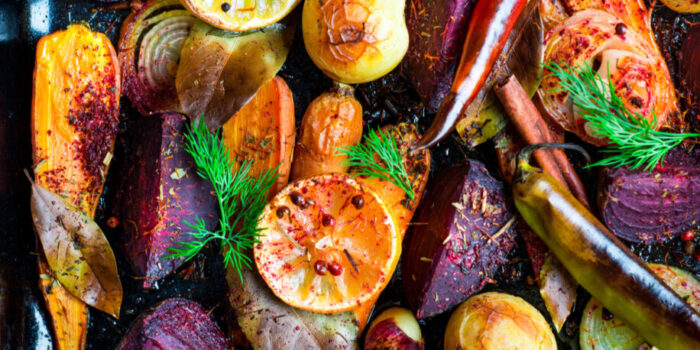
A large tray of roasted vegetables always makes me happy, but especially in autumn. That cozy warmth coming from the oven while the rain lashes against the windows outside, and after a while the result: different kinds of vegetables in all the colors of the rainbow (okay, except blue), their sugars brought beautifully to the fore by roasting, with a perfect dark charred layer around the edges (that’s my favorite, those vegetables you can just about stop short of calling burnt)… Will you roast along?

Which vegetables you use naturally depends on your taste, and if possible, try to think seasonally too. In the colder months, hearty vegetables such as parsnips, beets and carrots are delicious, as are Brussels sprouts and squash. And broccoli and cauliflower are always delicious from the oven. But do you ever wonder when it’s best to add salt to a baking sheet full of roasted vegetables?
Adjust to taste
That naturally depends first of all on your ideas about salty food. Some people may not or do not want to eat much salt at all, in which case you should adjust its use according to taste or dietary guidelines. The great thing about this way of preparing vegetables is that, thanks to the high heat—or lower heat but a longer time in the oven—much of the natural sugar in vegetables comes to the fore, and you automatically get very flavorful vegetables.
Toss it up
But if you like your food to be ‘well seasoned’, which in chef-speak means deliciously salty, you add salt here at different stages, little by little. Once you’ve prepared all the vegetables (washed or peeled if necessary and cut into evenly sized pieces), toss them with oil, salt and pepper in a large bowl and spread them over the hot baking sheet that you preheated while preheating the oven. Of course you can do it on the sheet itself, but since it’s scorching hot, a mixing bowl is easier.
Customize it
Work with one type at a time, in order of the cooking time a particular vegetable needs. The hardest vegetables will probably need the longest time, but very thin parsnip fries can burn quickly, so how you cut something matters too. In any case, add a teaspoon of regular table salt to a full bowl of sliced parsnips—say, 3 to 4 parsnips—with a tablespoon of oil. A few twists of the pepper mill, roast for 20–25 minutes at 180–200 C, and after tasting, sprinkle some Maldon salt over them once they’re out of the oven, if you have some at home.
Once the vegetables on the sheet have shrunk a little (become smaller from roasting), you can take the sheet out of the oven (carefully), move the vegetables to one side, and place the next batch or type beside them. Just make sure everything is still in a single layer and not packed on top of one another, because otherwise you’ll never get such a beautiful charred layer.
At the table
If you put a tray like that in front of me, I don’t need anything else for dinner except some good bread with butter. Need some protein? Roast some well-dried chickpeas alongside them, and make a quick sauce from 2 tablespoons of full-fat Greek or Turkish yogurt, stirred together with a drizzle of sriracha!
Also read:
- Put it straight in your cart: the most underrated frozen vegetable
- How to make the most delicious roasted garlic from the oven
- 5 ways your oven goes wrong


