


Ice-cold and perfectly prepared with the freeze-en-place technique
We love continuing to learn in the kitchen, and whenever we hear about techniques or ingredients that are still relatively unfamiliar, we’re more than happy to tell you all about them. Today: a simple technique you can use at home with a surprising result! Hint: make sure you have a little space in your freezer…

MEP-ing, WUPS-ing – you’ve already seen these and all kinds of other cooking terms pass by here on FavorFlav. Do you remember that MEP stands for mise-en-place? In other words, having all your ingredients measured and ready before the pans go on the heat (or the induction hob), so you don’t have to peel a winter carrot and cut it into perfect cubes (brunoise) at a crucial moment. And then this interesting variation on mise-en-place came along: freeze-en-place!
Fluffy sweet potatoes
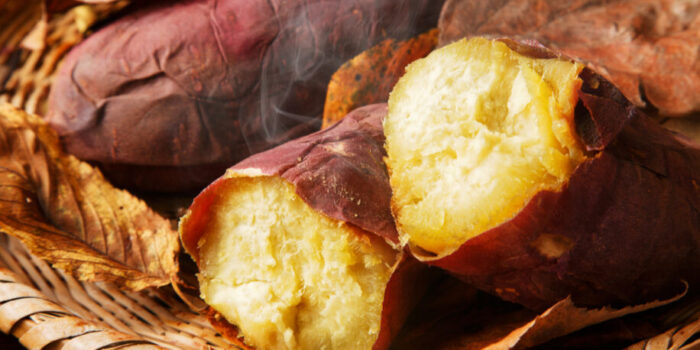
Admittedly, this fact isn’t brand-new, as we’ve written before about this technique applied to sweet potatoes. Chef Lucas Sin showed us how sweet potatoes that have first been frozen before being roasted and baked remain wonderfully fluffy and soft inside. A super-fun technique and accompanying recipe!
Pear trick
But on the American food platform Serious Eats, we saw that it’s also possible to apply this to fruit and tofu. Certain Chinese pears, which are picked hard and unripe, are repeatedly frozen and thawed so they can ultimately be eaten exceptionally sweet and juicy.
Frozen tofu
With tofu, the technique makes the tofu even more porous, giving it a meat-like bite. As the ice crystals expand, the tofu’s protein structure is ‘torn’. When the tofu thaws and the water runs out (and it also helps to squeeze the tofu a little extra), air remains in or behind the tears. This frozen and thawed tofu is eaten in soups, stews and hotpots.
Also read:
- Recipe: Scrambled tofu with crispy chili
- How to make tofu truly delicious
- Tips for the most delicious (loaded!) baked sweet potatoes
Source: Serious Eats


