


Keuringsdienst van Waarde: you’re getting seriously ripped off with supermarket noodles
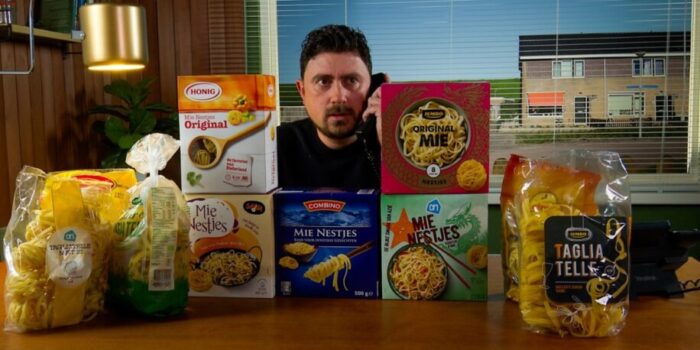
Just as there are countless different types of pasta, there are also many different types of Japanese and Chinese noodles. But what if those noodle nests might actually be pasta? Keuringsdienst van Waarde investigated it for us.

The programme did so after it was noticed that tagliatelle looks suspiciously similar to the nests of ‘noodles’ you buy at the supermarket. And yes, we can put that between quotation marks, because you’re being pretty seriously ripped off.
Hard wheat
One of the ingredients in both noodles and tagliatelle is wheat, which is used to make flour. There are different varieties, such as spelt, soft bread wheat and the harder durum wheat. The latter is used to make pasta. Because the wheat is harder, you can cook the pasta perfectly al dente. Durum wheat has a high protein content and is rich in gluten. These give your pasta an elastic texture and ‘bite’. This hard wheat variety also absorbs moisture better (which is why it’s so delicious with a perfect Bolognese).
Identical
But when Keuringsdienst van Waarde examines the ingredients on the noodle packaging together with the owner of a Chinese restaurant, they see that both are made from durum semolina or wheat semolina. That means the tagliatelle and noodles are exactly the same. And we’re not there yet. Because it turns out that the noodles from many supermarkets are simply made in Italy too. There, these noodles are called tagliolini, in other words, tagliatelle’s little brother.
In short, it turns out that all this time you’ve simply been eating tagliatelle with kecap, while the pasta is put in Asian packaging and sold at a different price. So next time, should you just use tagliatelle for stir-frying?
The 3 February episode of Keuringsdienst van Waarde about noodles can be watched again via NPO Start.
Source: Keuringsdienst van Waarde, image: KRO-NCRV
Read also:
- Hello supermarkets, we’re not happy about this!
- 5 pasta rules for the perfect pasta
- 7 common mistakes when cooking pasta


