


Mayonnaise unhealthy? Absolutely not, says this Flemish scientist
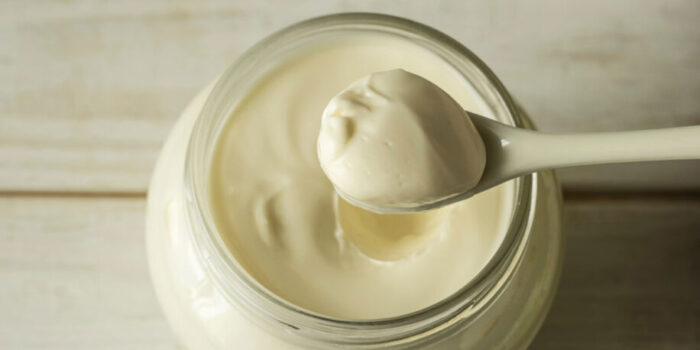
We’re all getting fatter and unhealthier, and no one has any idea anymore what healthy food actually is. That’s what Eric De Maerteleire says. He wrote the book Fables and facts about food and health, which clearly lays out all the information. And look, here’s something you didn’t know: mayonnaise is not unhealthy at all, according to this scientist.

Eric De Maerteleire is a bioengineer and holds a doctorate in Agricultural and Applied Biological Sciences. He has already written three books about food and health, and in his new book Fables and facts, he once again overturns a few sacred cows. Does honey help with a sore throat, for example (yes), is mayonnaise unhealthy (no), and are Teflon pans bad for you (sometimes)? Now that’s information you can actually use.
Nothing to worry about
So what about that mayonnaise? Healthy, according to Eric. The ingredients mayonnaise is made from are each healthy in their own right, so the combination is too. Egg yolks, oil, mustard, a little salt and pepper: nothing to worry about. Mayo contains no carbohydrates, protein and not too much salt, so the scientist isn’t concerned.
Make it yourself
Or is he? The oil used makes quite a difference. If you make mayonnaise yourself, you’ll use a neutral oil. This usually contains both omega-3 fatty acids and omega-6 and omega-9. And we eat slightly too much omega-6 in particular, and too little omega-3. That’s why Eric advises choosing rapeseed oil and canola oil, as they contain plenty of omega-3. Sunflower oil and corn germ oil, on the other hand, are full of omega-6. Olive oil would also be good, since it contains omega-9 along with a little omega-3—but anyone who has ever made mayo using only olive oil knows that it’s inedible, as it’s so bitter.
Salmonella?
The egg yolks may possibly contain salmonella if you make mayonnaise yourself, but according to him, the chance is not high. ‘So you still need to be careful not to serve this mayonnaise to vulnerable groups,’ he says. ‘Industrial mayonnaise undergoes heat treatment and no longer contains any germs, certainly no salmonella bacteria.’
Light mayo
And what about the calories, you might ask. The scientist is well aware of those too. Light mayonnaise contains less fat, but more sugar, so that doesn’t really solve anything. His advice: put a dollop on your fries and enjoy it. A scientist after our own heart!


