



No more arguments: this is the only right way to load the dishwasher
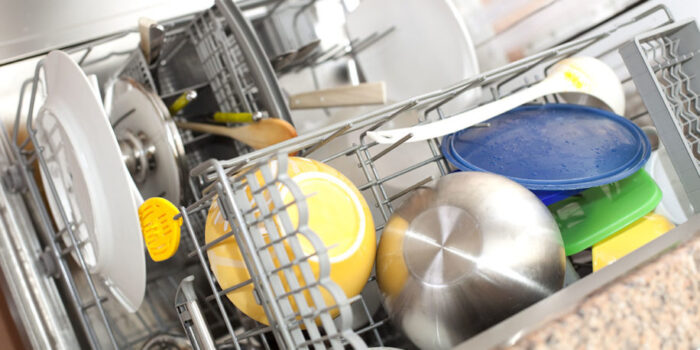
When the tension at home rises so high that one wrong remark or clumsy action is enough to cause an explosion, it’s good to know that there really is only one right way to load the dishwasher—and this is it. There, that’s settled—and now you can get back to arguing about little balls of socks between the sofa cushions.

Do you sigh as you pull half the dirty dishes back out of the dishwasher so you can load them ten times more efficiently? Or are you the person in your household who tries incredibly hard to load the dishwasher properly, but it never seems to be good enough? Those arguments are a thing of the past, because we have the only correct guidelines for loading the dishwasher right here.
Loading the dishwasher: here’s the best way to do it
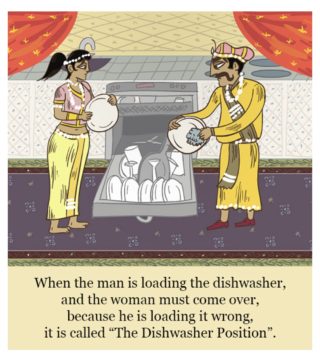
Be wise and do as we say, because there are couples who have seen their relationships go down the drain over smaller disagreements. And what would you rather have: clean dishes or hours of couples therapy? According to the Kama Sutra, there are other ways to do it too, but we won’t get into that now.
Wooden spoons? Ab-so-lutely don’t
Start at the beginning: not everything can go in the dishwasher. Have you noticed that charming wooden serving board comes out looking like a springboard from your old gym class? That wooden spoons turn pale and porous? And that spatulas prepare for your imminent divorce by splitting vertically in two? Conclusion: wooden kitchen utensils can’t be washed in the dishwasher, because the wood can’t withstand the heat of the machine. Chef’s knives become blunt in there, and cheap baking tins start to rust. Also watch out for cups, ashtrays and bowls from an artisanal pottery studio—the glaze will crack and flake off in the hot wash water. Unless they’re really ugly little bowls that you got as a gift once; in that case, they can go in the dishwasher just fine. No? Oh, what a shame.
Can that merry-go-round still spin?
Burnt-on baking sheet, filthy frying pan, barbecue rack covered in chicken satay? It makes sense that you’d like to put them in the dishwasher. But remember that the dishwasher isn’t a magic machine; there’s a small chance it will get this kind of large, dirty stuff clean. The rule: if you suspect a pan scourer will be needed, it usually will be. What’s more, large items like that in the dishwasher prevent the merry-go-round (there’s probably an official name for it, but who knows the official names of dishwasher parts?) from spinning, meaning the water can no longer swish-swoosh properly through the machine (also probably not an official dishwasher term). A greasy baking sheet is tough luck, because you’ll have to wash it by hand. Sorry.
Pre-rinsing is nonsense
In most households, the dishwasher runs once a day, sometimes twice. Are you the kind of person who pre-rinses everything? Then you might as well go old-school with soapy water and a dish brush. In modern dishwashers, it works best if you scrape the worst chunks off the plates and then put them in the rack. In fact, the dishwasher detergent works better that way, because it needs enzymes from blobs of peanut butter and leftover gravy. Exception: Brinta, because after ten minutes left to dry, it turns into shock concrete. Has the bolognese sauce dried completely? Can’t you get the coffee rings out of the cups after two days? Then run a pre-rinse cycle. Do occasionally clean and rinse that horrifying little filter at the bottom of your dishwasher, too. It’s a lovely chore if you want to show that you regret your last argument. Top up the dishwasher salt while you’re at it.
Is it dirty or is it clean?
Unload the thing as soon as it beeps; it takes less than ten minutes, and in the meantime you can make tea and coffee. Sorry, a point of personal frustration. But if the dishwasher has been sitting half full or half empty for a while, doubt can set in: are those plates and cups dirty, or are they clean? Tip: once you’ve emptied the dishwasher, immediately put a new dishwasher tablet in the compartment and close it. That’s a clearly visible signal that ‘this machine still needs to run’. If the dishwasher tablet compartment is open, the machine has already run and everything is sparkling clean.
Knife up or down?
Don’t overstuff the cutlery basket. If the spoons and forks are packed in like sardines, no soapy water can get between them. Duh… you could have figured that out yourself. Less obvious: cutlery up or down? Most of the grime is obviously not on the handles, so the cutlery can go in that basket with the spoon and fork ends pointing upward. Exception: knives, because they’re sharp and someone could hurt themselves on them. So those go in upside down. Are you a sorter? Forks together in one section, spoons in their own? Good for you, you must have a tidy, organized and otherwise empty life. But don’t be mean to the people who throw their cutlery randomly into the sections, because creativity is born from chaos, so there’s really nothing wrong with it.
Read also:
- From dishwasher to Michelin-starred chef: here’s how
- Goodbye, foil frustration
- How to maintain your cast-iron pan


