


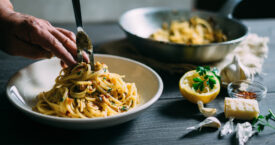
The simple yet surprising pasta pesto recipe by renowned chef Massimo Bottura***
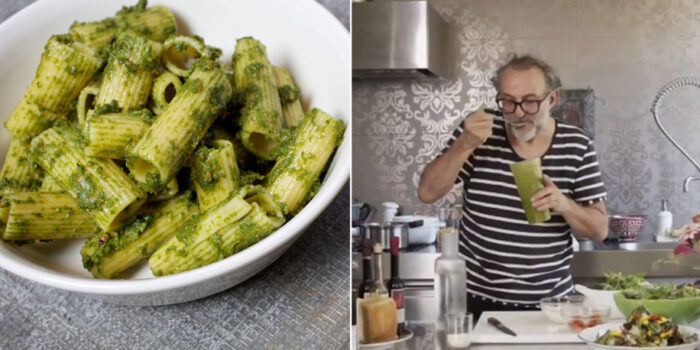
Three-Michelin-starred chef Massimo Bottura invited us to a Zoom conversation, and we enjoyed every minute of the hour and a half — plus, we learned the ultimate trick for making pasta pesto even more delicious. And of course, we’re happy to share it with you!

Massimo Bottura — surely that name is familiar to you. He was one of the stars of the Netflix series Chef’s Table and earned three Michelin stars at his Osteria Francescana. If there’s anyone who embodies Italian cuisine, it’s him. Or, as he puts it himself: ‘There is no blood flowing through my veins, but Aceto Balsamico, and my muscles are made of Parmigiano.’ The fact that he mentions these two products is no coincidence; Massimo Bottura is from Emilia-Romagna, and Balsamic vinegar and Parmesan are the best-known products from this region. His Osteria Francescana is located in Modena, the home of the only truly authentic Balsamic vinegar.
Against food waste
A few years ago, Massimo and his wife Lara founded Food for Soul, an organization that aims to make healthy food accessible to everyone. This led to the so-called refettorio, a kind of soup kitchen where he turned surplus food into affordable meals, so that people with little money could also eat well. ‘The cuisine of leftovers is very important. My grandmother never threw anything away; there was no food waste in my family, and I inherited that. No Parmesan rind is thrown away: it is cooked, or put in the oven with a little white onion that has been gently simmered. Or on pizza… delicious!’ The refettorio is a great success; there are now refettorios in Milan, Rio de Janeiro, London and Paris. You get it — I think he’s a hero.
Zooming with Bottura
During my Zoom meeting with Massimo Bottura, I was glued to my screen. The way he talks about Italian cuisine and his love for authentic Italian products is incredibly inspiring! In between, he showed us how he makes his killer pasta pesto, and if you thought you already knew everything about this winning dish… think again and definitely read on.

You can take pesto in all kinds of directions
As is true for pretty much every Italian dish, the same goes for pesto: every Italian makes it their own way. Sometimes traditionally, the way di mamma used to make it, and sometimes a little differently. Once, I learned from a chef to add herb stock to pesto; another chef recommended a little anchovy, and FavorFlav’s Emma swears by a knob of butter and a splash of cooking water for extra silky pesto. But Bottura’s trick was new to me!
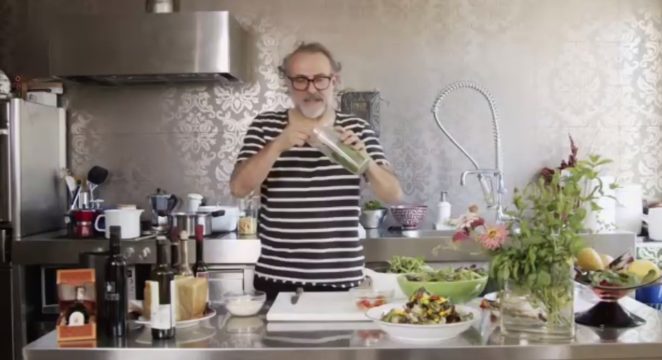
How to make Massimo Bottura’s pasta pesto
Start by cooking the pasta in plenty of vigorously boiling, salted water. Not simmering, not a few feeble bubbles — this stuff needs to boil.
Then the pesto. Bottura makes his with basil and mint. But first, he puts a clove of garlic (crushed with a knife) in the blender. Then he adds the basil, with a little mint. Bottura’s tip: basil and thyme are also a delicious combination, and a little parsley works well too. Then add some finely ground stale breadcrumbs. Bottura: ‘This came about because we didn’t have pine nuts available during quarantine.’ Next into the blender goes Parmigiano Reggiano — the one and only Parmesan, the King of Cheeses — aged 24 or 36 months. Bottura, visibly moved: ‘Many products are imitated abroad; people say they come from Italy, but they don’t come from Italy at all. I see fake products very often when I travel. Parmesan, imitated in South America, wow… That is not Parmesan!’ Set aside 6 tablespoons of cheese to finish the dish. Meanwhile, Bottura adds olive oil to the blender.
Cold water
And then — here it comes — a little cold water that has spent three hours in the refrigerator. Bottura: ‘Cold water enhances the quality of the ingredients and helps prevent oxidation.’ Blend as quickly as possible! And then: taste! ‘A cook’s best tool is their own mouth. Is everything properly balanced? That is the most important thing! The balance between the ingredients is essential. Italian cuisine means being sensitive. I didn’t use any salt, because Parmesan already contains salt.’
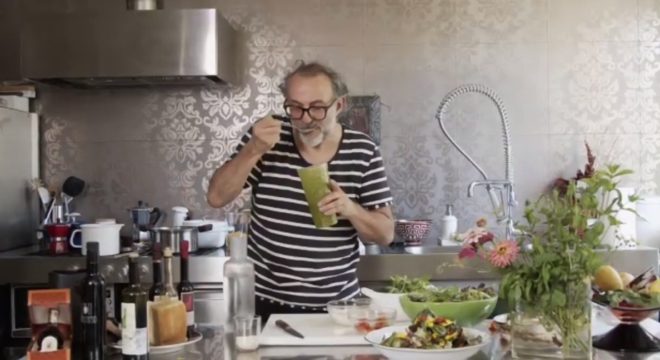
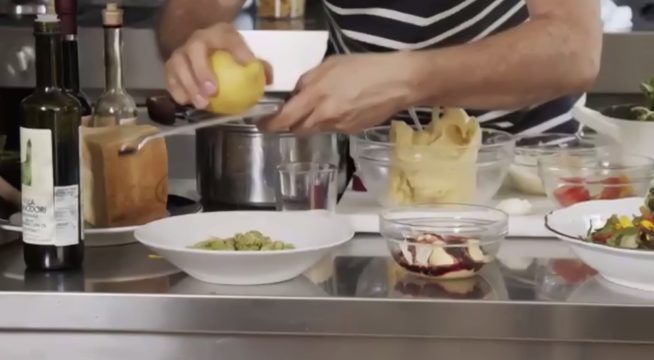
When the pasta is al dente (al dente), drain it in a colander without rinsing, and reserve a little cooking water. Put the pesto in a bowl or in the pan in which the pasta was cooked, add the pasta and toss with the sauce. If the pasta seems too dry, add some of the cooking water to make it creamier. Then let the pasta rest for a moment. Bottura: ‘I never really enjoy pasta that’s too hot in summer.’ Finish the dish with some Parmigiano Reggiano and grated lemon. Heaven on earth. Buon appetito!
Also read:
- Massimo Bottura goes Dubai
- Massimo Bottura opens a hotel
- Massimo Bottura opens a second Gucci Osteria in Los Angeles


