



These are the differences between Arabica and Robusta coffee beans
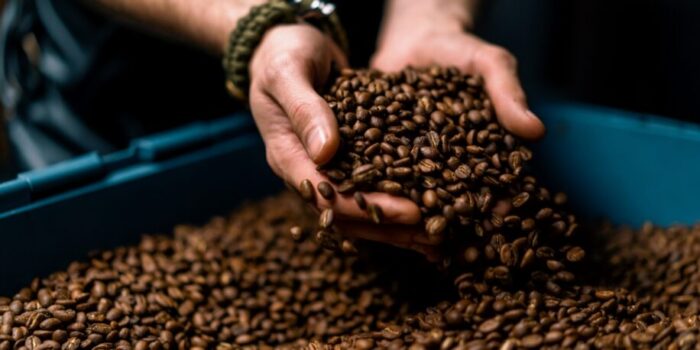
There’s so much to learn about coffee. For example, that you’re a dangerous lunatic if you drink black coffee. And that drinking coffee before breakfast really isn’t smart. What about coffee itself? The coffee product, that is? Coffee is made from Arabica or Robusta beans, for example, but do you actually know what the difference between them is?

Around 60% of the global coffee market consists of Arabica beans. 30% is Robusta beans. Quite a difference, then. But that’s far from the only thing you can say about Arabica vs. Robusta.
Caffeine
Caffeine is probably one of the main reasons you drink coffee. Or maybe even why you feel like you need coffee. How else are you supposed to survive your workday until 5 p.m.?! The caffeine content is one of the things in which Arabica and Robusta beans differ the most. Robusta beans contain twice as much caffeine as Arabica beans. This is because Robusta beans grow at lower elevations: around 800 to 1,000 metres, while Arabica beans thrive at elevations of 1,000 to 2,000 metres. Robusta beans produce more caffeine to protect themselves against parasites. These occur at lower elevations. At higher elevations, Arabica beans don’t have to deal with them as much.
The taste of Arabica and Robusta beans
The taste of Arabica and Robusta beans also differs quite a bit. Robusta is rather bitter, while Arabica beans are sweeter, more floral and more aromatic. Arabica beans also have a much milder flavour. If you drink Robusta beans, it often really tastes like a strong brew.
Use
If you thought it didn’t matter which bean you use for coffee: you’re wrong. Robusta beans are used for espressos, while Arabica beans are used for filter coffee. That’s why espressos are so strong. The Robusta bean means that the espresso has a higher concentration of caffeine and tastes more bitter.
Price
Another unavoidable difference: the price. You pay considerably more per kilo for Arabica beans than for Robusta beans. Why is that? Arabica beans are harder to obtain. It’s not a given that Arabica coffee plants will always do well. They are more likely to become diseased because they produce less caffeine. That acts as a kind of protective agent, after all. Arabica coffee plants also grow considerably higher than Robusta coffee plants. This makes them harder for coffee farmers to reach.
Also read:


