



These are the differences between Ceylon and Cassia cinnamon
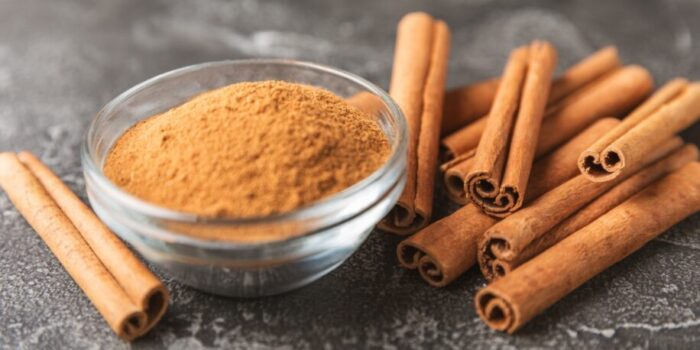
It’s an incredibly popular spice: cinnamon. But did you know that not all cinnamon is the same? That there are two types of cinnamon—Ceylon and Cassia cinnamon—and that there are quite a few differences between them? We’re diving into the world of cinnamon, so you can soon sprinkle your friends with interesting facts.

We all have a jar of cinnamon somewhere in the spice drawer. Whether you add it to your granola, use it in baked goods or add it to stews, cinnamon does something important: it adds warmth to your dish. That’s why so many people love it.
Ceylon cinnamon versus Cassia cinnamon
Let’s start with one similarity: Ceylon and Cassia cinnamon both come from the cinnamon tree, or Cinnamomum. However, Ceylon and Cassia cinnamon don’t come from exactly the same tree. Ceylon cinnamon is made from Cinnamomun Verum, a tree that grows in Sri Lanka. Cassia cinnamon, on the other hand, comes from Cinnamomum Cassia. It can be found in Indonesia, among other places, although the tree originally comes from southern China.
Cinnamon sticks are made from pieces of the inner bark of the cinnamon tree. When the inner bark dries, it rolls up into the familiar shape we know as cinnamon sticks. Ceylon and Cassia cinnamon sticks don’t look exactly the same, however. The bark of Cinnamomun Verum —the tree used for Ceylon cinnamon—is much thinner. Ceylon cinnamon sticks are therefore more fragile. They also consist of several thin layers rolled inward on one side. Cinnamomum Cassia has thicker bark, which is why Cassia cinnamon sticks are thicker too. In addition, they are rolled inward on both sides, like a kind of heart.
You can also see straight through a Cassia cinnamon stick: it is hollow. You can’t do that with a Ceylon cinnamon stick because of its many layers. The color of the two types of cinnamon also differs. Cassia is more dark brown with a reddish tint, while Ceylon has a lighter brown color.
Difference in flavor
Quite a few differences so far. What we’re at least as curious about is this: what are the flavor differences between Ceylon and Cassia cinnamon? There’s certainly something to be said about that too. Ceylon cinnamon is sweeter and warmer in flavor than Cassia cinnamon. Its flavor isn’t particularly sharp. Cassia cinnamon, on the other hand, has a strong flavor that is also spicy and bitter. These flavor differences are partly due to the amount of cinnamaldehyde. This compound is responsible for cinnamon’s flavors and aromas. Approximately 95% of the oil in Cassia cinnamon is cinnamaldehyde, compared with 50 to 63% of the oil in Ceylon cinnamon. That’s why Ceylon cinnamon tastes milder than Cassia cinnamon.
Which cinnamon you prefer is of course very personal. In general, Ceylon cinnamon is somewhat higher in quality. That’s why it is also more expensive. Cassia cinnamon is of somewhat lower quality compared with Ceylon cinnamon, but it is more affordable. That’s why many supermarkets stock Cassia cinnamon. When it comes to Ceylon, this is often explicitly stated on the packaging. Just look at brands such as Euroma and Mill & Mortar. Or the well-known Verstegen: they sell ground Cassia cinnamon, but their cinnamon sticks are 100% Ceylon.
Watch out for this compound in cinnamon
Finally, there is one more difference between Ceylon and Cassia cinnamon worth noting. It concerns the amount of coumarin, a compound that naturally occurs in various plant species. Cassia cinnamon contains approximately 1% coumarin, while Ceylon cinnamon contains much less: 0.0004%. Is that a problem? Well, coumarin is said to be toxic if you consume too much of it. It can cause liver damage or dangerous bleeding, as coumarin inhibits blood clotting. In extreme cases, it could even cause cancer. If you consume two full teaspoons of Cassia cinnamon every day, you exceed a recommended limit and should be careful. But small amounts of Cassia cinnamon, such as those you would normally use, are perfectly fine. So you can safely eat a speculaas cookie, sprinkle a pinch of cinnamon over your granola or add cinnamon to your baking.
Baking with cinnamon
All this talk about cinnamon is bound to make you hungry, isn’t it? In any case, I recommend these cinnamon rolls with pecans. They’ve been a huge trend for years, having blown over from Sweden, and I’m very happy that this snack—which also works perfectly well for breakfast—is now so popular here. Along the same lines, French toast with cinnamon simply can’t be missing. The good news: you’ll have it on your plate in no time. In the mood and have time to pull a cinnamon showstopper out of your hat? Then this meringue pie with apple, cinnamon and blackberries is a fun weekend project.
Also read:
- Panettone and Pandoro: these are the differences between the Italian Christmas desserts
- How long do spices keep?
- Everything about one of the world’s most expensive spices: vanilla
Sources: Euroma, Verstegen, Green Gypsy Spices, A Healthy Life


