


This is why you should actually leave supermarket coffee on the shelf
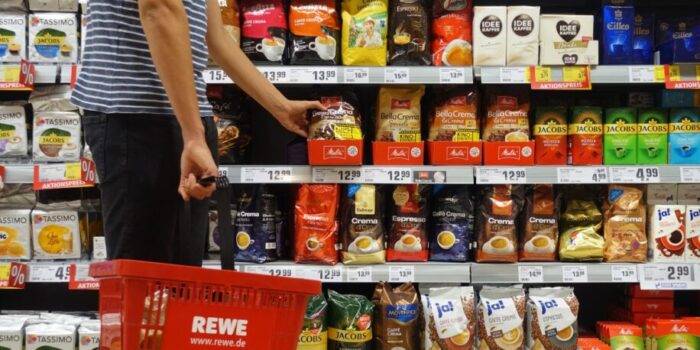
Whether you’re addicted to coffee or drink it occasionally for the conviviality, absolutely no one enjoys slurping from a mug of dishwater. No, we do want the ‘black gold’ to live up to its name a little, right? In that case, you’d better not buy your coffee beans at the supermarket.

Supermarket coffee simply cannot be compared with the coffee your favourite barista makes at your favourite coffee bar. That coffee, specialty coffee, is of an entirely different quality. Much more flavourful and complex than the boring bags you find in the supermarket. That’s not an opinion; it’s genuinely true. So what causes that difference?
Dark roast: bitter, flat coffee
Coffee beans are naturally green. When the roaster roasts them, flavours, scents and aromas are released. That process ultimately determines whether the coffee in your cup tastes good—or not. Light roast beans are lightly roasted. They’re fruity, lightly acidic and not bitter; perfect for filter coffee. Medium roast coffee beans are slightly darker in colour and taste more like caramel. Because these beans are roasted a little longer than the light roast variety, they taste slightly more bitter. Dark roast beans are very dark. They’re oily, sticky and extremely bitter. It’s difficult to discern much of a coffee flavour in them. Dark roast beans can form the basis of milk coffees such as cappuccinos. The milk disguises the bitter taste a little.
You very often see ‘dark roast’ on supermarket coffee packaging. A clever marketing term, because somehow we often think that’s a good sign. But it isn’t! Dark-roasted beans, as I said, taste bitter. By roasting beans so darkly (or, frankly, roasting them to death), they ultimately taste very flat. Bitter, but flat. The imperfections of the bean have been erased. All the complexity, exciting aromas, scents and flavours you can taste in a light or medium roast cannot be found in dark-roast supermarket coffee. If you’re happy with that, fine. But know that you can get better. In coffee too, yes.
It’s far from always fresh
Coffee beans don’t remain delicious forever once they’re in the package. Ideally, you want to consume the beans within a maximum of six weeks after roasting. After that, their flavour gradually becomes less enjoyable. So how do you know whether your beans are still good or not? A good roaster puts the roast date on the packaging. From that date, you can easily estimate how long your coffee will keep. On specialty coffee packaging, you sometimes see that the roast date was only a few days ago. Super fresh, in other words. But here’s the thing: with supermarket coffee, you often don’t see a roast date on the packaging. That’s another thing producers are ‘obscuring’: the freshness of the coffee. Can’t you find a roast date anywhere? Run!
Low price = not the best
Supermarket coffee is usually cheaper than specialty coffee. The beans, which are low in quality, are bought in bulk at a low price and then mass-roasted (darkly). The low price is a reason for many people to buy their beans there. But such a low price is hardly a good sign. Coffee is a complex product that involves a great deal of time, money and energy. For both the coffee farmer and the roaster. For years, there has been discussion about coffee farmers being paid far too little for their coffee. The question is: do you want to encourage that?
Of course, you can’t tar all supermarket coffee with the same brush. The Filter Coffee Aroma from Jumbo, for example, was recently praised at the Superior Taste Awards. And attention for coffee farmers and the prices they receive is also increasing. But honestly; if you really want value for money, go for specialty coffee. Tug on your favourite barista’s sleeve or take a look at Koffietje.nl, for example.
Read also:


