


What’s better: braising in the oven or on the stovetop?
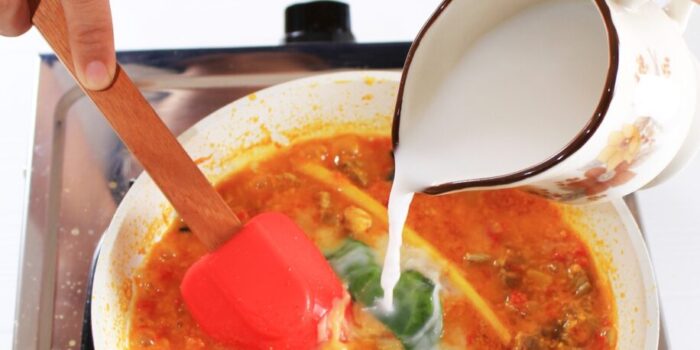
Whether you’re making boeuf bourguignon, ossobuco or a lamb tagine, it doesn’t matter: a stew is always delicious. The most important ingredient is a generous dose of patience, because the longer you let the meat simmer, the better it tastes. Does it make a difference whether you let the meat simmer in a Dutch oven on the stovetop or in the oven?

All day long, you can look forward to hachée, pulled beef or coq au vin, while the whole house smells of delicious food. A stew like that is pure delight. Do you make yours on the stovetop or in the oven? Some readers are saying now: WHAT, in the oven?! Of course a stew belongs on the stovetop. In a heavy pot, with the lid almost closed, the gas (or electricity) turned down so low that you occasionally hear a ‘blup’ from the pot, and nothing more. Stir occasionally, taste a little, and otherwise leave it alone.
Evenly
Other readers are saying now: WHAT, on the stovetop?! They make every stew in the oven. There’s something to be said for that: the heat is distributed more evenly, you don’t have to worry about a cheeky cat knocking your pot off the heat (true story), and burning isn’t an issue either. Oven or stovetop, making a stew takes just as long: allow at least an hour and a half for coq au vin, and up to four hours for braised beef.
That’s how she does it
Julia Child, more or less the godmother of French cuisine, makes her boeuf bourguignon in the oven—after browning all the ingredients on the stovetop. Oven at 160, lid on, and after a few hours you’ll have beautifully tender meat. The perfect Dutch oven is one of those heavy cast-iron pots, and the great advantage is that it can also go straight into the oven.


