


Why Is Butter Sometimes Rock-Hard?
Some butter is rock-hard outside the fridge, while other butter is simply… as soft as butter. How is that possible? Luckily, Keuringsdienst van Waarde dives into this question to get to the bottom of it. Along the way, they stumble upon the old Frisian proverb: you milk the cow through its mouth. Sooo…

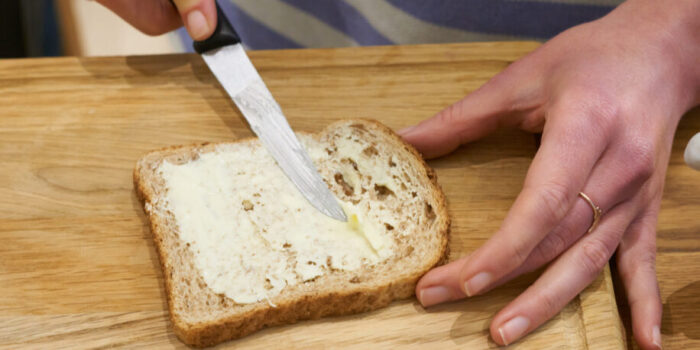
You probably know the feeling: you go to spread some butter on a sandwich, but the butter is so hard that you end up tearing the whole sandwich apart. You might say you should take the butter out of the fridge in time, but that’s not the problem, because some butter is as hard as a rock even at room temperature. Is it because of the higher fat content? No, that’s the same for all butter, namely 82 percent.
Pinch test
Making butter is actually very simple, explains the butter maker from the Weerribben. ‘Whip cream, very aggressively, and then you get butter.’ Grass-fed butter is the tastiest butter, says the butter maker. He even calls it ‘a premium product’. It is made from milk produced by cows that eat grass. And pinch tests show that grass-fed butter is also the softest. Could the secret to soft butter lie in the feed? ‘Grass makes the fats a little softer, so the butter spreads more easily. Feed determines the milk product.’ So the more grass, the softer the butter, Teun concludes.
Milking
But here’s the thing: cows don’t eat only grass, because they don’t get enough energy from it to produce a lot of milk. They also get corn, silage, beans and feed potatoes, and… palm fat. An expert in cattle nutrition can explain. ‘You milk the cow through its mouth,’ he says. What a cow eats determines the quality of the milk, and therefore of the butter too. But palm fat? ‘With a small amount of palm fat in the feed, the farmer can quickly increase the fat percentage of the milk,’ the expert explains. And the dairy factory likes a high fat content too, because it makes better butter from it.
Making a brick
The conclusion of Keuringsdienst: give a cow a little palm fat, and the butter turns into a brick. Correct, says a professor of dairy research who was consulted. But in winter, cows also eat more corn, which makes the butter harder too. Hard butter contains more saturated fat; soft butter contains less. That’s the difference. And what does it all come down to? Money, of course. If milk contains a lot of protein and fat, the farmer gets a little more money per litre of milk. And those few cents per litre can just make the difference between profit and loss—the margins are that small these days.


