


What’s the difference: pilsner is always beer, but beer isn’t just pilsner
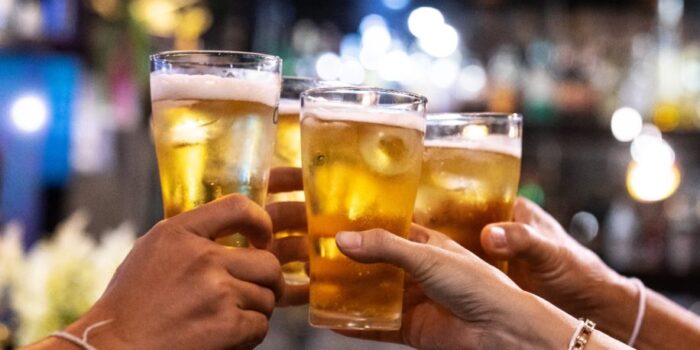
What would you like to drink, the bartender asks. ‘Just a beer.’ And usually you’ll get a glass of pilsner. What’s wrong with this story? Well, there’s much more to beer than just pilsner. What’s the difference? We’ll explain it one more time.

Pilsner originally comes from Plzen
In the city of Plzen, in the Czech Republic, the residents were not at all happy with the beer in 1840. So they started brewing beer themselves. It became something new: a lighter beer, made with bottom fermentation. A German brewer came up with the idea, but the people of Plzen were satisfied. Voilà: pilsner was born.
Bottom fermentation and top fermentation
Bottom fermentation? What? It’s a complicated story. Most beers are made with top fermentation, in which the wheat mash (the wort) is heated to between 15 and 25 degrees. The yeast remains floating on the fermenting mash, hence the name ‘top fermentation’ or ‘high fermentation’. Bottom fermentation takes place at lower temperatures, between 4 and 12 degrees. The yeast sinks to the bottom of the vat. So bottom fermentation requires lower temperatures, which is why it makes sense that it was originally mainly used in countries with cold winters. A different type of yeast is used for top fermentation than for bottom fermentation. Did you know, for example, that Heineken has its own yeast?
Does bottom fermentation mean pilsner?
No, other types of beer are also made with bottom fermentation, such as IPA, bock beer and oud bruin. Trappist beers are made with top fermentation, just like ale and wheat beer.
Beer, beer, beer
Beer is therefore the collective name for all drinks made from water, malt, herbs and hops. From Guinness to IPA and from Kriek Lambiek to an ordinary pilsner, they’re all beer. Beer is probably the oldest drink in the world, and it is the most widely consumed—after water and tea.
Hops?
A plant, incidentally related to cannabis , whose flowers are important for the flavor of beer. In the past, hops were used as a preservative to keep beer fresh for longer; nowadays, hops are added to give beer a delicious flavor and aroma. Brewers now use other flavorings alongside hops, such as anise, coriander (in IPA), orange peels or sour cherries (in cherry beer), but hops remain a constant.


