



Help! How do I survive the Asian supermarket?
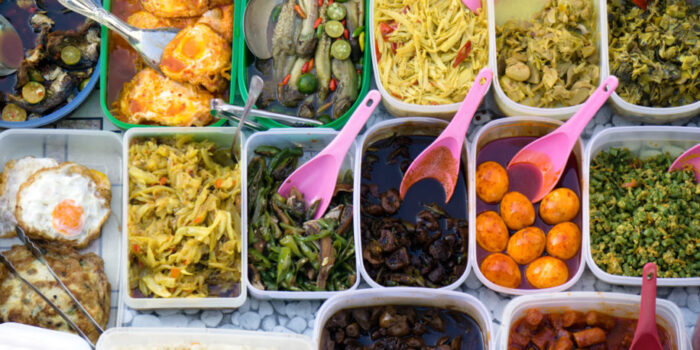
One of my favorite places on earth: the Asian supermarket. Although I can completely understand that it can be rather overwhelming for newcomers. The fact that the products are often displayed in narrow aisles and that the staff sometimes don’t speak the best English doesn’t exactly help either. FavorFlav comes to the rescue: this is how to tackle the Asian supermarket.

Chances are you walk into the Asian supermarket with a specific shopping list, for a Thai curry or Indonesian rendang, for example. Next time, try looking for an ingredient you’ve never used before. Google is your friend—a quick search will turn up plenty of recipes.
Fresh
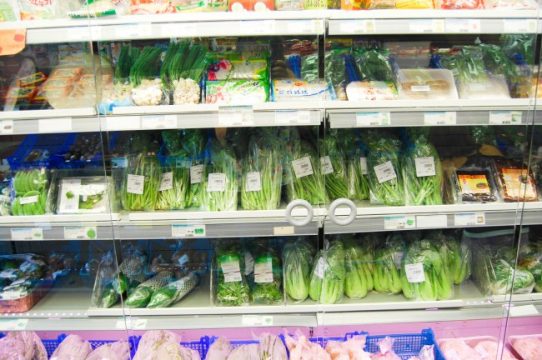
The fresh produce section of the Asian supermarket is a dream. Cheaper than the regular supermarket and much fresher too. This is where you go for standard items such as ginger, chilies and scallions. But you’ll also marvel at vegetables you’ve never seen before, such as choy sum (a relative of bok choy) and Chinese garlic scapes. And morning glory, a favorite of almost everyone who has ever visited Southeast Asia.
Tofu is also in the refrigerated section with the fresh products. If all goes well, you can choose between silky silken tofu and firmer varieties, all suitable for different dishes.
Beer
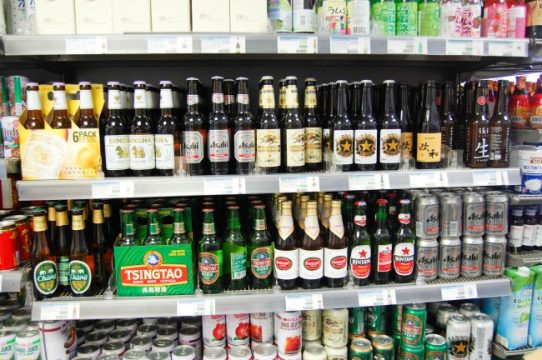
The perfect way to imagine yourself back in your former holiday destination for a moment. Or simply fun to serve a Bintang with your Indonesian rijsttafel, or a Chang with your Penang curry. Asian vibes guaranteed.
Soy sauce
Anyone who wants to cook an Asian meal needs soy sauce. The enormous variety of types may make your head spin. Kikkoman is for Japanese dishes, dark soy sauce is widely used in Chinese cuisine, and every Indo keeps kecap manis in the cupboard. Make sure you get the white bottle with the yellow label and green cap (it looks like this); it makes a world of difference.
Chili sauce
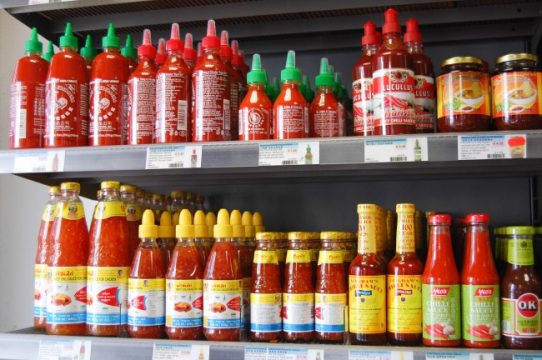
Sriracha and sambal oelek are of course standard pantry staples. But the real daredevil looks beyond those at the Asian supermarket. Hot sauce with Sichuan pepper, for example, or gochujang (Korean chili bean paste). Each has a slightly different flavor and they’re fun to experiment with.
Even more sauce
Hoisin, plum sauce, black bean sauce, ponzu, yuzu, XO sauce, okonomiyaki sauce, sauce specifically for Peking duck. The world of sauces is at your feet when you visit the Asian supermarket.
Noodles
You can also go all out with noodles here. The thickness and shape of a noodle have a huge influence on the taste. I like rice noodles best when they’re slightly thicker and round, except when making spring rolls—in that case I use glass noodles. For ramen, you need completely different egg noodles than for lo mein.
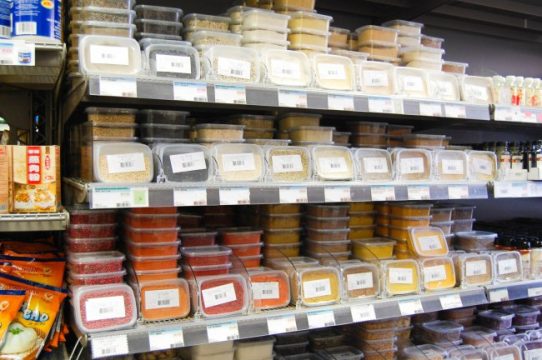
Spices
Besides being much cheaper than at the regular supermarket, spices also come in handy little containers that make storage a joy. Simply stack them on top of one another and write what’s inside on the side if the Asian supermarket hasn’t already put a sticker on it. Whole or ground coriander, cinnamon, chili powder, dried chili flakes, allspice, star anise, bay leaves or sesame seeds. The list is endless. Filling your pantry has never been this much fun.
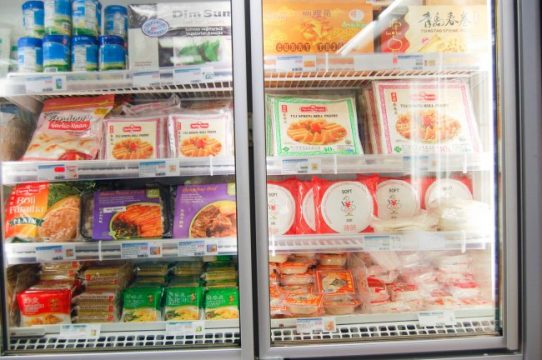
Freezer
The freezer is ideal for lazy cooks. A whole seasoned Peking duck or char siu pork, ready-made dumplings, bao buns, custard buns, tempura shrimp. When I stand in front of the freezer section, I really have to restrain myself. You can also get frozen fish and shrimp here; they’re right next to the green tea and sesame ice cream and the pre-cut mango (perfect for mango sticky rice).
Read also:


