



10 lessons I learned as a wine virgin on my first wine trip to Rueda: the region of verdejo
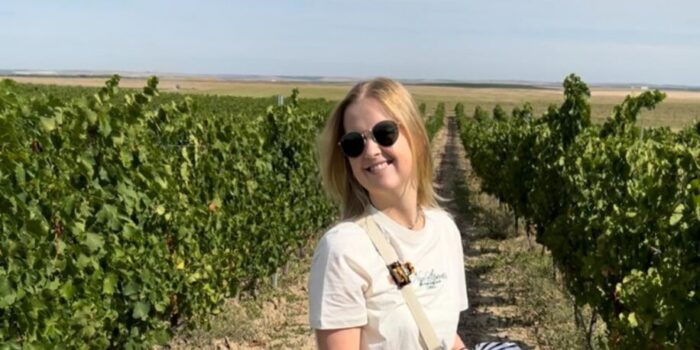
There’s one thing I’ve known about wine for years: I like drinking it. But that’s pretty much the extent of my wine knowledge. I admit it, I’m a wine virgin. Somehow, I never took the time to delve into the divine stuff. Until I took a wine trip to Spanish Rueda – the region of the verdejo grape. What lessons did I learn as a wine virgin on this trip? I’m happy to share them with you!

Nowhere in Spain does the verdejo grape grow in such large quantities as in the Rueda region. It’s a crispy, fruity wine that is muy popular in the Netherlands. In fact, we’re the world’s number-one importer of verdejo! The Spanish white wine is also becoming increasingly popular outside the Netherlands. It’s no coincidence that World Verdejo Day takes place every year in June. So I’m over the moon that I get to discover Rueda Verdejo, in Rueda itself, no less. Did I shed my wine virgin image in the Spanish vineyards? And which tips & tricks did I take home that will come in handy in my new life as a non-wine virgin ?
1. Leave those light-coloured clothes in your suitcase…
You can already see yourself strolling around in your new white trousers and beige blouse. Fine, but wear them in the streets of the town or village where you’re going out for dinner in the evening. Not in the vineyard. You’re surrounded by grape juice and wine: tattoos for your light-coloured clothes. Don’t let your fashionable self be tempted, and leave your white outfit in your suitcase if a vineyard is on the schedule. After that, you can strut your stuff.
2. …just like your sandals or flip-flops
Yes, I know. They’re so comfortable. But the pebbly, sometimes sandy ground of the vineyard isn’t the ideal place for them. Neither are the floors of the wine cellar, which can be as slippery as ice because of the high humidity. I experienced it myself when I walked through the wine cellars of Bodegas Mocen and Alvarez y Diez. Go for something sturdy. Something you can walk comfortably in, without sand, pebbles or grapevines ending up between your toes. And without risking taking a tumble in the winery itself. So choose shoes with a sturdy sole.
3. Spit (if you want to make it to the end of the day)
I confess: I don’t drink that much alcohol. So my alcohol tolerance is low. Very low. After just one glass, it already goes straight to my head. So what happens when you’re tasting almost 100 wines in three days – as I did during my wine trip to Rueda? You’ll never survive that, right?! No, not if you swallow all the wine you pour into your mouth. A major mistake I made on my first day in Rueda. I simply didn’t think about it; I took a sip, tasted it and whoosh – the wine slid down my oesophagus. Again, and again, and again… Even when I saw my fellow travellers spitting out their wine. Because yes, that’s what you’re supposed to do. There are little buckets ready for you to neatly spit your sip of wine into. Do it. (Or don’t, at your own risk.)
4. Hydrate & eat (& repeat)
If, like me, you forget to spit, this step is especially important. But proper hydration during a wine trip is of course essential for everyone. Especially when it’s boiling hot during your wine trip – which it certainly can be in Rueda in summer. (That’s why they harvest at night there: it’s much cooler and the grapes stay fresh and crisp.) So drink plenty of water in between. You’ll undoubtedly get it at tastings, but don’t forget to bring a bottle as well. I guarantee you: even if you’ve barely had any alcohol, you can feel like a shrivelled sardine during and after your wine trip.
This is probably a little unnecessary to mention to our food lovers, but make sure you eat enough too. Go all out at your hotel’s breakfast buffet – not difficult if they have pan con tomate, I’d say – and make sure you have a good lunch. At some tastings, you’ll be served crackers or baguette. Eat them. Because not only do you make sure there’s something in your stomach, you also neutralise your palate while tasting the wine. That way, you’ll taste your wine even better. Two birds with one stone!
5. With a little luck, you’ll discover your new favourite wine
Until two weeks ago, whenever a waiter asked what kind of wine I wanted, I’d always say, ‘Anything’s fine, I like it all anyway.’ I have to admit I’m typing this with a little embarrassment. Because hola!, there are so many flavours and therefore preferences you can have. I now know, for example, that I’m crazy about oak-aged wines. Wonderfully soft, full-bodied, complex, creamy and often even a little buttery. So that’s what I’d liked all along! During the Rueda trip, I thought the oak-aged vintage (100%) Verdejo from 2021 by Bodegas Pita was incredible, for example.
6. You become a walking wine dictionary (well, sort of)
During a trip like this, wine terms are thrown around constantly. Not by me, incidentally, because I didn’t know them yet. But by the end of the Rueda trip, I was genuinely much wiser. Vertical wine tasting? I initially had no idea. Now I know it means tasting different vintages of the same wine. It’s fun to discover how they differ in flavour when they’ve spent longer in the bottle, or when the harvest was different in those years. And vintage? That doesn’t mean you’re holding a nice retro bottle, but that you’re holding a wine made exclusively from grapes from one particular year. The most difficult word I learned is Phylloxerica, or grape phylloxera. In the nineteenth century, it destroyed a large part of all European vineyards. Rueda too, although, thank God , a few vineyards were preserved there. Why didn’t we get this lesson in secondary-school history?!
7. But a wine expert? Not quite
If that’s your goal with one trip, you’ll be coming home from a very cold vineyard. Nope, you’ll be nowhere near an expert. For that, you really need to spend years in the trade and keep at it. I looked on admiringly as some of my fellow travellers made one accurate tasting note after another and tossed around interesting wine terms (some of which I now know). But yes, that’s knowledge and experience built up over years! You’ll never get all that into your head on a little three-day trip. Nor should you want to. Just focus on the information you receive, enjoy the wines and try to learn from what you hear and taste. Wine is an incredible product. And don’t forget: after your trip, you’ll be more of a wine connoisseur than you were before, no matter what. Even if, like me, you simply discover that you love oak-aged wines.
8. A little reading up beforehand doesn’t hurt
Speaking of knowledge, it is a little useful to read up beforehand. About wine in general, or about Rueda Verdejo. That makes it a bit easier to follow the winemakers’ explanations. Especially with English-speaking Spaniards, you need to be fully focused. If you’re still wondering minutes later what on earth they were talking about, you’re done for. Or Juan or Carlos, I don’t know who the Spanish equivalent of ‘the Sjaak’ is.
9. You have to let go of pretty labels
As a wine virgin who had no idea what tasted good, I usually relied on my eyes when looking for wine. Pretty label? Then it must surely be a tasty wine. That’s something I’ve moved away from quite a bit after my Rueda trip. If your wine is delicious and attractive, you’ve hit the jackpot, of course. Now, I have to say we were lucky in Rueda. Shaya Winery had deer on the label, Alvarez y Diez had storks and Bodegas Pita had birds – and they were all delicious. Naturally, we were first in line.
10. Rueda is a fantastic place for your first wine trip
Rueda is fantastic. Verdejo from Rueda certainly is: it has been the editors’ favourite aperitif wine here for years. But if, like me, you want to learn more about wine, it really is an ideal region to expand your knowledge. The winemakers are so passionate. Some stick to the way they’ve been making wine in the bodega for years. Others are trying new things, such as organic production methods. They have one thing in common: their passion shines through. Lesson 10 may therefore be the most important lesson I learned. Rueda, thank you for all the wisdom (and above all the delicious Verdejos) you’ve brought me!
Also read:
- Bordeaux vs. Burgundy: 10 differences between the world-famous regions
- Know before you go: 8 Spanish delicacies you may want to avoid
- These are the favourite Spanish ingredients of 7 top chefs
With thanks to D.O. Rueda and The Finest


