


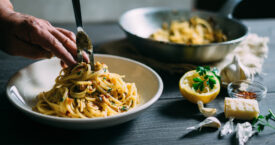
These are the favorite Spanish ingredients of 7 top chefs
We recently tipped you off about the very best Spanish restaurants in our country. In the mood to bring Spanish cuisine into your own home? We spoke to the chefs of top Spanish restaurants and asked them about their favorite Spanish ingredients. Which products do they say shouldn’t be missing if you want to play Spanish chef yourself?

You hear chefs say it so often: good ingredients are essential for a delicious dish. Quality is everything, and sometimes you have to look a little further than the supermarket around the corner for it. Fortunately, the chefs know exactly where to go for that fantastic Ibérico ham or beautiful Manchego. And as it turns out, you don’t necessarily have to book a ticket to Spain for that. So you can get started at home in no time!
Top chefs share their favorite Spanish ingredients
Alfredo Hoz Castillo (La Oliva Pintxos y Vinos, Amsterdam)
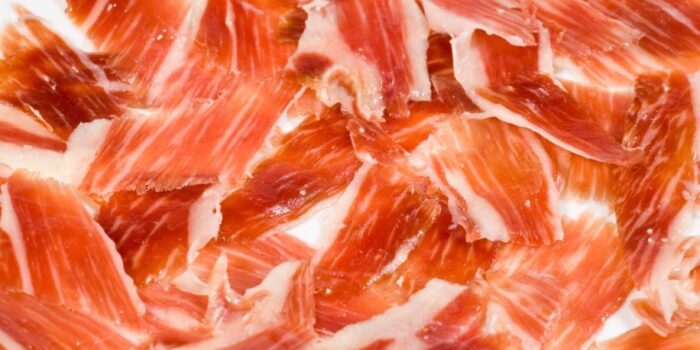
‘“My absolute favorite ingredients from Spanish cuisine are olive oil, Pata Negra and anchovies from Cantabria. They are unique ingredients and delicious in their natural form. In short, irresistible. You mainly find them at good specialty shops and delicatessens. We like to shop at La Venta Groothandel (a Spanish wholesaler in Amsterdam’s harbor) and Pacomer Traiteur in De Pijp.”’
Raquel Padrissa and Paul van Wanrooij (Gaudim, Breda)
‘“As a chef, I have a very broad range of things I really enjoy. It varies with the seasons and the occasion. If I have to choose, I would definitely go for the Ñora pepper: a dried, mildly spicy pepper with a warm flavor. I regularly use it on our menu in Salsa Romesco and, this season, often in Estofado as well. You can find Ñora peppers—dried or as a paste—at better Spanish delicatessens. I’m also a real fan of Iberico pork. Fantastically flavorful, marbled meat. My advice is to choose Bellota quality. It’s a little more expensive, but you get more flavor in return. Your quality butcher around the corner will undoubtedly stock this meat. And finally, I would choose anchovies. The same applies here: cheap often turns out expensive. The more expensive ones are much less salty and are packed with flavor. I use the fillets on salads or as a flavor enhancer in various salsas. Sunshine, a terrace, a glass of wine, pan con tomate topped with a delicious anchovy—and your day can’t go wrong.”’
Dario Evangelisti and Giorgio Pinto (Tapisco, The Hague)
‘“We buy many of our favorite Spanish ingredients directly from Spain. For example, we get Paleta Iberico de Bellota, 5 Rosas and Jamón Iberico Cebo de Campo from Tierra de Sabor. We get Manchego, our favorite Spanish cheese, from Campo y Alma. We’re also crazy about salted, marinated sardines. If we really have to choose a number-one favorite, we would go for good empanada dough sheets. We also get those directly from Spain, from PrecoFood. The dough’s structure and consistency are perfect. They’re also easy to use when making empanadas; we use them to make our famous empanadas, filled with ground beef, tomato and herbs. Michelin itself praises our empanadas and even calls them the best in The Hague!”’
Lex van Stralen (Sevilla, Utrecht)
‘“One of my favorite ingredients is sobrasada: a soft, seasoned pork sausage. It has a unique, rich flavor that balances spicy, salty and sweet notes. Its soft, spreadable texture makes it appealing both on bread and in recipes. Another winner: anchovies. A versatile ingredient with an intense, salty umami flavor that can greatly enhance a dish. I also like to use spicy paprika powder to give my dishes an extra boost. When it comes to meat and cheese, I choose Jamón Bellota and Manchego. Jamón Bellota because of its unique flavor profile and silky texture, and Manchego because it comes in so many varieties. Something many people don’t know! We like to surprise our guests with Manchego Romero, with rosemary, for example. I also recommend getting a good sherry for your home. Sherry offers a wide range of styles, from bone-dry to incredibly sweet, which appeals to all kinds of tastes. We use Pedro Ximénez in our ice cream, for example, and sherry vinegar to marinate our celeriac. Finally: olives. They’re incredibly versatile—for example, for making olive oil—and delicious. We like to stock up on all these ingredients at Pureham, a Spanish delicatessen.”’
Iñaki López de Viñaspre (Sagardi, Amsterdam)
‘“At Sagardi, Basque cuisine is central. So all my favorite ingredients are Basque. Basque cuisine is largely about vegetables, each in season and locally produced. My favorite Basque vegetable is without a doubt the lettuce from the Hernani garden. It’s grown especially for us in the Basque Country and transported weekly to Sagardi in Amsterdam. Fish is also an important ingredient in Basque cuisine: the Bay of Biscay is full of different kinds of fish. My favorite is turbot. When we talk about fish, turbot is the essence of Basque cuisine. And finally, I love Txuleton, or ribeye from an older cow. It has truly become a traditional ingredient in our cuisine here. In the Basque Country, you can buy these ingredients at any local market. Here in the Netherlands, you should—of course—go to Sagardi in Amsterdam!”’
Ashley Marengo (Destino, Rotterdam)
‘“I have three favorite ingredients: calamari, Jamón Ibérico and Pimentón. Spanish cuisine has fantastic seafood, all of which I love, but calamari stands out to me because good squid is a very surprising product that hardly anyone knows. Everyone is familiar with the tasteless, chewy frozen stuff, while fresh squid is a very flavorful, lightly sweet and slightly briny product. If prepared properly, it needs very little to be truly delicious. You can get it from the fishmonger. Ask for fresh North Sea squid, because that’s when you’ll get the best quality. Jamón Ibérico has a fatty, nutty flavor that adds depth to dishes. The best quality is Bellota, so try to find that at a delicatessen. Pimentón is smoked paprika and one of the key flavorings in Spanish cuisine. It’s widely used in chorizo. Cheap Pimentón is often a little musty. That’s why it’s worth going to a good specialty shop, such as Vanilla Venture in Amsterdam.”’
Chef Pablo (Bar La Rana, The Hague)
‘“Spanish cuisine is based on reusing everything and wasting nothing. Less is more. We therefore make many dishes using, for example, Jamón bones and leftover Jamón and Cecina de Leon (smoked and dried beef ham). Olive oil is also very important in our kitchen. Besides olive oil, jamón and Cecina de Leon, I like to work with Lomo (pork loin), Paleta (pork leg) and Pimentón de La Vera (dried paprika powder from the La Vera valley in Extremadura). We have just opened a shop where you can buy all these products for your Spanish pantry: Bodegón at Stationsweg 36, The Hague. That way, I bring Spain to the place I now call home.”’
Read also:


