


5 burning questions about bock beer answered
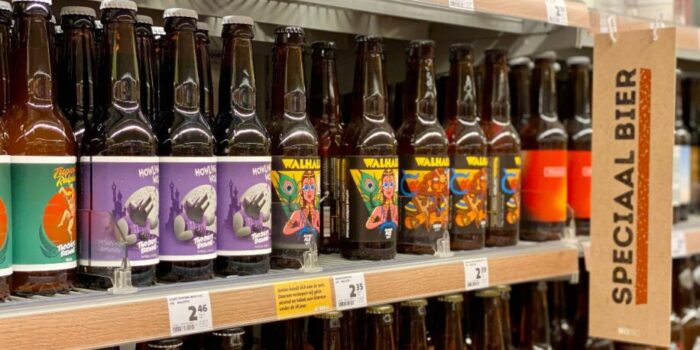
At the café where I once worked, autumn was always ushered in with a tasting session for the staff featuring all the bock beers we would be selling from then on. If you had finished the entire tasting card, you could only make it home under supervision, but if all went well, you could once again tell guests everything about the popular dark brown seasonal beer. In memory of that: 5 things you want to know about bock beer.

Because it’s a very fitting autumn drink, right? Fairly strong, which means you immediately want to curl up by a fireplace or on the sofa. Or stay at the café with your friends and keep telling each other increasingly exaggerated stories. It’s smart to be careful with it, but if you handle it with a little common sense, a bock beer is generally a great idea.
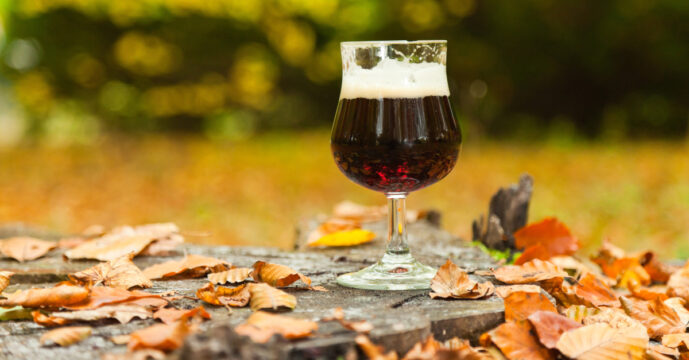
Why on earth is it called bock beer?
To begin with: this beer actually has nothing to do with a male goat. Yes, in the Netherlands we have grown attached to the idea of matching words and images, and you see a rutting animal with horns on many labels. But the name originates in the northern German town of Einbeck, where it was probably first brewed in the 17th century. From there, the beer ‘travelled’ to southern Bavaria, where Einbecker soon became ‘Ainpöckisch’ in the local dialect, which was then mangled into ‘Ainpöck’, and so it was only a matter of time before it became known colloquially as ‘Ein Bock’.
Has the name bock beer changed with the times?
In German, a goat is a ziege, so once again—it has nothing to do with a male goat. It used to be spelled with ‘ck’ in the Netherlands too, but these days you often see the word bokbier written with just a ‘k’. For convenience, I’ll do that from here on too.
Has anything else changed?
Another thing that is no longer the same as it used to be is the strict legal requirements regarding colour and alcohol percentage (which are still enforced for Weizen, for example). But one thing is still adhered to: 15.5 percent by weight of the wort (the sugar-rich liquid that is an intermediate product in the production of beer and other alcoholic drinks) must consist of dissolved substances. Beyond that, brewers are free to experiment, which is why you see many different types of bock beer at specialist beer shops, supermarkets and in the hospitality industry.
Is bock beer simply darker lager?
Bock beer generally contains twice as much malt as regular lager. This malt is dried at 150 degrees and then caramelises, giving bock beer a sweet flavour and a darker colour.
Are there different types of bock beer?
Absolutely; what we are talking about here is actually the drink known as autumn bock. But there are also lighter and fresher varieties released in spring, such as ‘Meibock’ and ‘Lentebock’. There is also ‘Doppelbock’, brewed with even more malt and an even higher alcohol percentage. Finally, there is Eisbock, in which a doppelbock is cooled to just below zero degrees, allowing the ice crystals (that is, the water) to be removed. What remains is a bock beer with an even higher alcohol percentage.
You may already have known all this if you are a beer lover. But for others, it may be useful to be even better prepared for this bock beer season!
Also read:
- Surprising or not: this is the most popular beer brand in the world
- What’s the difference: lager is always beer, but beer isn’t only lager
- These are the best-selling alcohol-free beers in the hospitality industry


