



A non-alcoholic beer after exercising: does it actually help with your recovery?
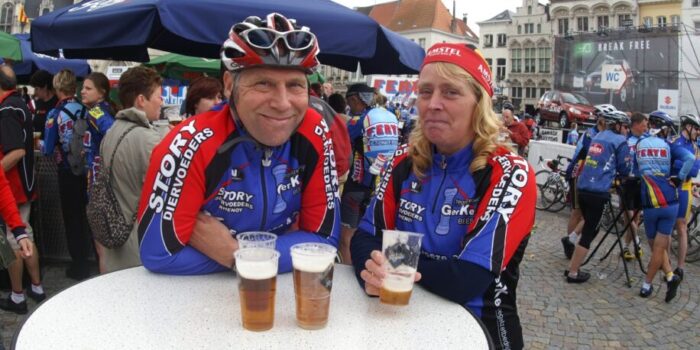
A beer after exercising. Non-alcoholic, that is. But knowing that such an ice-cold thirst quencher is waiting for you naturally makes you run faster. Right? Whether you should take that literally is the question. For a while now, people have been saying that a non-alcoholic beer is good for your recovery after exercising. Is that really true?

Especially after the 2018 Olympic Games, many experts turned their attention to this question. After their events, German Olympians threw themselves en masse into non-alcoholic beer. As if they had brought their (non-alcoholic) Oktoberfests with them to South Korea. Honestly, there is nothing to criticize about their performances at the time. The country finished second in the Olympic rankings. But whether all those non-alcoholic beers had anything to do with it…
Non-alcoholic beer after exercising
It should be clear that a beer with alcohol is not exactly conducive to recovery after exercising. Yes, it will probably make you celebrate your victory a little more enthusiastically, and all that dancing and jumping is almost a sporting achievement in itself. But your recovery takes much longer if you down your favorite alcoholic beer after exercising. Still, many people see exercise and celebrating achievements as inseparably linked. And something that at least looks like beer fits right in. Is non-alcoholic beer a good solution, then?
Carbohydrates and proteins
To find out, we need to look at what is actually in such a non-alcoholic beer. In other words, which substances in non-alcoholic beer might help our bodies recover. Carbohydrates and proteins are important nutrients that help us function somewhat normally again after exercising. Carbohydrates provide new energy, while proteins help your muscles recover. Are these substances found in non-alcoholic beer? Absolutely. According to Het Voedingscentrum, a small glass of non-alcoholic beer (340 grams) contains 20.7 grams of carbohydrates (including 10.9 grams of sugars) and 1 gram of protein. That sounds positive, right?
Isotonic effect?
On the labels of non-alcoholic beers, you often see the term ‘isotonic effect’ prominently displayed. It sounds positive and, in a way, athletic too. Broadly speaking, an isotonic effect means that the carbohydrates, minerals and vitamins in non-alcoholic beer are quickly absorbed into our blood. Indeed, that also sounds like something our bodies would appreciate after a strenuous effort.
Milk is good for everyone
Still, we should not celebrate too soon based on this information. According to scientists from Ghent University, we really do not get that much benefit from non-alcoholic beers when it comes to physical recovery after exercising. Sports nutrition expert Wim Derave says there is no point in getting your carbohydrates from a glass of non-alcoholic beer, and that you are also much better off choosing alternative drinks if you want to get your protein. For comparison: a 250-gram cup of whole milk already contains 8.3 grams of protein, compared with that one gram of protein in a 340-gram small glass of non-alcoholic beer. As for carbohydrates, you are better off choosing a sports drink containing plenty of combinations of fast and slow sugars.
Conclusion
But of course, there are now also non-alcoholic beers on the market that genuinely target athletes. Like Thrive: a non-alcoholic beer with extra protein added. A 330-milliliter can contains 10 grams of protein, already considerably more than a regular non-alcoholic beer. Still, a glass of dairy will remain a better option. It simply contains more protein per equivalent amount than non-alcoholic beer—whether or not extra protein has been added.
So what can we conclude? A non-alcoholic beer after exercising really cannot do any harm. You just should not expect it to help you recover faster after your athletic performance. In that case, you are genuinely better off choosing a sports drink or a glass of dairy. But we also understand that you are not going to stand in the canteen with a glass of milk and a milk moustache.
Also read:
- Best news of the day: a glass of wine is equivalent to an hour of sweating at the gym
- Workout with wine bottles: bye-bye, gym!
- Guinness launches non-alcoholic beer
Sources: Ghent University, RTL Nieuws, ONP5, Het Voedingscentrum


