


Anonymous expert reveals secrets about surimi sticks
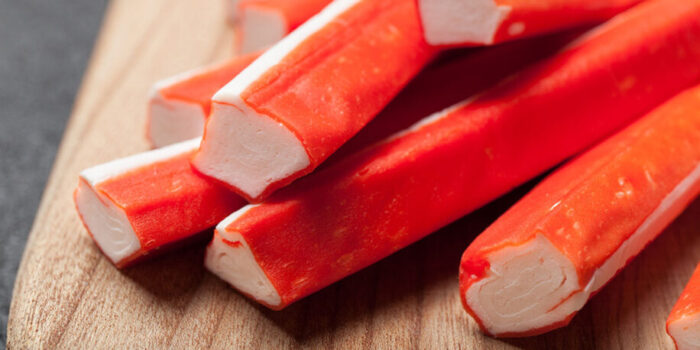
Surimi, what is it? Strange pink sticks in the refrigerated section of the supermarket, the pink strands in so-called crab salad or round slices in the very cheapest sushi, but that still doesn’t tell you much. What’s in it? Where does it come from? And how does it get its flavor? A surimi expert reveals all the secrets.

If you think that surimi is the clever invention of food technology, then you’re right – and also kind of wrong. Surimi actually has a long history: in the twelfth century, it was a method for keeping fish fresh for longer. Those orange-pink sticks were invented by a Japanese fish-processing company. In the seventies, they brought a kind of fish flakes to the market; in the eighties, those became the famous wobbly sticks you can now pull out of the plastic.
Crab: zero
The big secret: there isn’t a single gram of crab in it, even though it tastes like crab and has more or less the texture of crab. How is that possible? Surimi expert Matthieu (he doesn’t want to reveal his surname so he can remain anonymous within the surimi scene) is responsible for that perfect imitation flavor. With, among other things, MSG and yeast extract, a little sugar, salt and thickeners, the white fish is given a flavor that resembles crab. That’s because crab sticks are made from finely chopped white fish, which is rinsed in fresh water and then pressed together into an odorless, flavorless paste: the surimi base.
Steamed surimi
The mysterious Matthieu explains that the surimi sticks sold in supermarkets in Europe are slightly orange and mainly given a crab flavor, while surimi sticks in Asia are pinker and taste like lobster. Adapted to the local food culture, because in theory surimi could taste like anything. In Japan, several types of surimi are available, says Matthieu: steamed, boiled, fried, you name it. There, it isn’t a substitute for lobster or crab, but simply another way of preparing fish. Surprising!
Also read:
- Bizarre: this fake egg is almost impossible to distinguish from a real egg
- 9 times you’re seriously being fooled at the supermarket
- That wasabi with your sushi is totally fake
Source: Vice


