



Fact or fiction: can you reheat spinach?
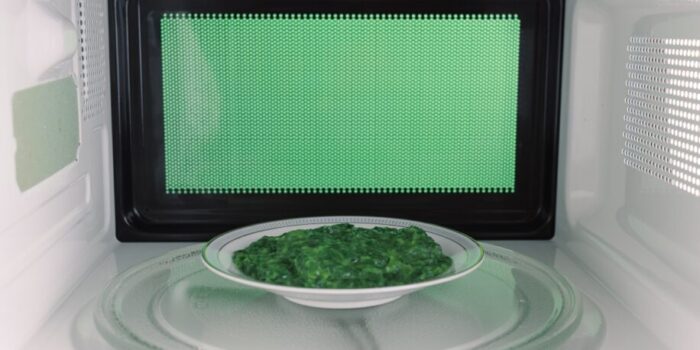
“Sweetheart, you need to be careful with spinach. You mustn’t reheat it!” I can still hear my grandmother saying. Even then, I didn’t think it was a particularly convincing story. Because when I asked “why?”, the only answer I got was “it’s not good for you”. Okay, but why not? And is it actually true? Time to find out.

Spinach: I absolutely love it. Stir-fried on its own, worked into pasta or in breakfast, as far as I’m concerned, you can never eat enough spinach. Lately, though, the green powerhouse hasn’t always been in the news for the right reasons. Remember the recall over metal particles in frozen spinach? And the poop bacterium that was found in Jumbo’s spinach a while back? Okay, I’m not exactly presenting the strongest arguments to support my love of spinach. Hopefully, that will change in a moment.
Where does this story come from?
Spinach is packed with nitrates. They’re not bad for you at all. In fact, some scientists even claim that they have beneficial effects on your body, such as lowering blood pressure. You only need to be careful with nitrates when they convert into nitrites. In large quantities, nitrites can indeed be harmful to us. They can reduce the blood’s oxygen saturation and may even be carcinogenic. Not exactly positive, then.
So how do nitrates turn into nitrites? That’s the work of bacteria. These bacteria work best when they’re at least at room temperature. That’s where the advice not to reheat spinach comes from: by doing so, you give the bacteria plenty of room to get to work.
Extremely low quantity
But is reheating spinach a second time really dangerous? No. The amount of nitrites you can take in through food is extremely low. For adults, there’s therefore no problem at all. You would really have to eat a huge amount of spinach to consume a dangerous quantity of nitrite. Babies under 6 months old, people in poorer health and pregnant women should be a little more cautious.
Keep it cool
There’s also something you can do to be on the safe side. Put your reheated spinach straight in the fridge. At a temperature of around 4°C, you virtually switch off the bacteria. You can therefore safely eat your leftover spinach the next day, even if you reheat it on the plate. The Voedingscentrum does advise not keeping your leftovers in the fridge for longer than 2 days. After that, it’s better to throw them away.
Also read:


