


Panic: who will be behind the wok at your favorite Chinese restaurant soon?
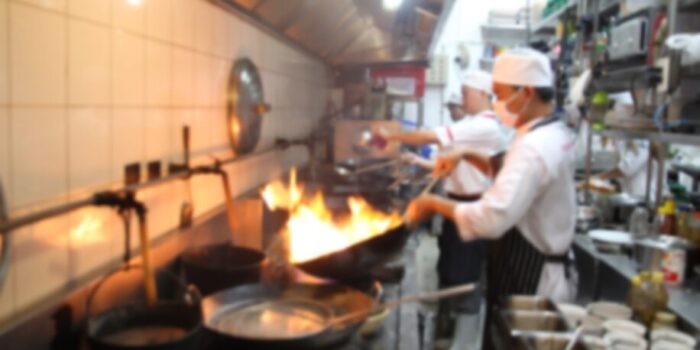
Making crispy pork belly with a Chinese twist yourself is of course great fun, but the fact remains that we Dutch people love bami goreng, foe yong hai and other dishes from Chinese and Chinese-Indonesian restaurants in our country. However, it will come as no surprise that this sector is also struggling with severe staff shortages. And that has major consequences for the future. Will we even still have Chinese restaurants in our country in a few years?!

The Wok Agreement
For a long time, it was relatively easy to bring chefs from China to the Netherlands. They could put this highly specific way of cooking into practice in restaurants here. Culinary training programs in the Netherlands were not necessarily geared toward this particular field, so the Asian Hospitality Industry Covenant—in other words, the Wok Agreement—was established. The agreement allowed restaurants to set special job requirements for chefs, such as speaking an Asian language. Normally, such requirements may not be imposed under employment migration law. Thanks to this agreement, Chinese chefs could obtain a work visa for the Netherlands more easily. But once they arrived, things did not always go smoothly, and that had major consequences.
Human trafficking and exploitation
Various abuses, such as exploitation and human trafficking, came to light in the sector. In 2022, this led the cabinet to decide to suspend the special work visa scheme. A longer transition period was introduced because the special assessment framework had already been in force since 2014. But as of July 1, 2022, the Wok Agreement was definitively discontinued. Asian restaurants can no longer use the special scheme to bring specialized chefs from outside Europe to the Netherlands.
Asian chefs may still work here. But in that case, the employer must apply for a work permit or a combined residence and employment permit (GVVA).
Younger generation with different interests
The companies that crossed the line have seriously ruined things for well-intentioned fellow business owners, who can now barely find trained kitchen staff. And staffing the kitchens of Chinese restaurants was already difficult. As we wrote earlier, the Chinese-Indonesian restaurants rooted in our culture are also slowly disappearing, because the younger generation of Chinese Dutch people often no longer wants to take over their parents’ business. That was of course also what the covenant was intended for: to prevent these traditional techniques and culinary skills from disappearing from our restaurant scene.
Who will be behind the wok?
What are you seeing now? Chinese restaurants are closing their doors earlier. They are cutting their menus in half, so there is less choice for customers. They are closing part of their restaurant. Or they are working with semi-finished products, meaning Chinese dishes are no longer made entirely from scratch. But we are left with a pessimistic outlook. Some chefs who came over from China were treated particularly badly by their employers, and with staff shortages and no clear prospect of new workers, it remains to be seen who will be standing behind the woks here in the future.
For now, we are going to enjoy the Chinese restaurants that are still around as much as possible. Our list of the best Chinese restaurants in Amsterdam includes gems you really must visit at least once. Taste of Culture, for example: unbelievably good. You really wouldn’t want to imagine all of this disappearing one day…
Also read:
- The best-kept secret of Chinese cuisine
- Making dumplings yourself: satisfaction and togetherness!
- Recipe: how to make Brown Sugar Boba (Bubble Tea) very easily
Source: Het Parool


