


Reheating soup: this is how you do it (it requires precision)
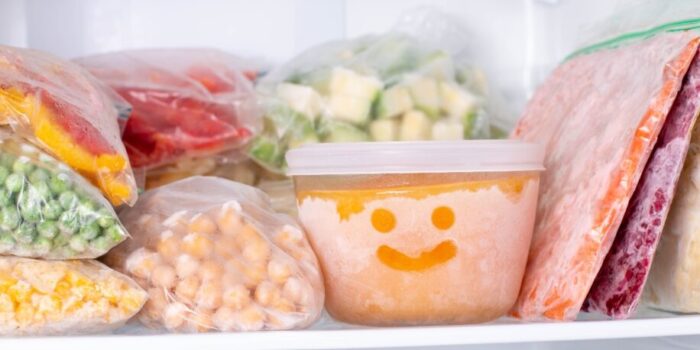
When you make soup, it’s never a one-person portion. No, you make pots full—it’s just as easy. And then you freeze it for a busy week, handy, right? But, uh: freezing it requires precision. And so does reheating your frozen soup.

What is wealth? A credit card with no limit, a speedboat or a magnificent villa, sure, a fun start, but a freezer full of your homemade favorite soup is worth something too. Because a delicious soup is simply liquid love, if that isn’t an unappetizing comparison, and a bowl of warm soup will make you much happier than filing credit card statements in a folder or mowing a gigantic lawn.
Not every soup
Thick soups that make a meal are especially good for freezing. So a minestrone or thick pumpkin soup, thickened tomato soup or old-fashioned chicken soup: put them in containers and freeze away. Soup with lots of cream doesn’t work as well, nor does soup containing pasta, vermicelli or rice.
Garnishes: keep them separate
If you always add some fresh herbs to your soup, a little crème fraîche or grated cheese on top, or crunchy croutons, leave them out when you’re going to freeze the soup.
Packaging
What’s the best way to package soup when you’re going to freeze it? Tupperware is of course great, but at some point the entire freezer is full of containers. And then what? Airtight bags, such as those unsurpassed ziplocks from Ikea, are perfect. Put the soup in (enough for 1 person), remove as much air as possible and seal the bags well. Freeze them flat, for example by sliding them into the freezer on top of one another on a tray or oven dish. Put baking paper underneath: if some soup drips out of the bag, everything won’t freeze together.
Save those tubs
A glass jar for the freezer: bad idea. But a plastic cup, such as the kind you buy yogurt or quark in, is absolutely perfect. Everything you freeze expands a little, so don’t fill such a container to the brim—leave a little room.
Cool it first
You have a huge pot of soup, some for you and the rest for the freezer. How do you do that? Let the soup cool as much as possible on the counter and later in the refrigerator. You can also cool the soup quickly by placing the pot in an ice bath, for example in the sink. And stir! Then put it in the containers or bags, and afterward in the freezer.
Sticker or marker
Please don’t forget to add stickers or write on the packaging with a waterproof marker which soup you froze and when. This way you’ll avoid heating up rhubarb ice cream because you thought it was pea soup, for example, or pasta sauce when you were expecting tomato soup. No freezer roulette!
Don’t wait too long
Soup keeps well in the freezer for at least three months, but not forever. Don’t forget about it—it’s not a mammoth you can chip out of the ice thousands of years later, as good as new.
Reheating? Keep it cool
Defrosting works best in the refrigerator. Take it from the freezer in the morning and put it in a bowl in the refrigerator; your soup will be liquid by dinnertime. Impatient? Use the microwave (provided the packaging is microwave-safe too—check that).
Soup with cream
It’s better not to freeze it, but then again: garlic soup with heavy cream is absolutely delicious! How do you handle that? Normally, you add the cream at the very last minute. So prepare your soup up to the point where you add the cream. Divide your soup into portions: finish today’s bowl with heavy cream or mascarpone, and put the rest in the freezer. Add the cream only after you’ve defrosted the soup again.
Also read:
- The best tomato soup ever simply comes from the supermarket, and this is it
- How to remove that huge block of ice from your freezer
- 11 things that keep in your refrigerator for at least two weeks
Source: The Kitchn


