



Remarkable: these Dutch people avoid the baker’s
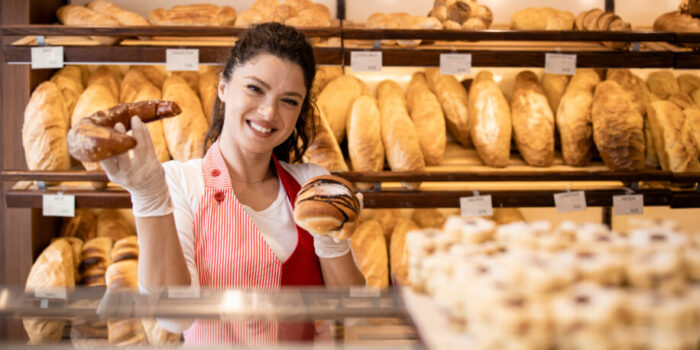
The Netherlands, the land of sandwiches, the people of bread! But where do we buy our bread? Apparently, not always at the baker’s. A recent study by NielsenIQ revealed that the Dutch bread landscape is changing significantly. What does it show? The baker’s is far from being the obvious place to get your bread. In fact, you hardly see some Dutch people there at all. So where do they buy their bread?

The supermarket has become the king of the bread landscape. Not surprising, because supermarket bread is getting tastier and better. La Place, for example, has a bread range in Jumbo stores that is second to none. And this Dutch supermarket’s simit is even tastier than the one from a Turkish baker’s!
Yet no fewer than one in five Dutch people buy their bread mainly from a traditional baker.
Regional differences: the south holds the baker dear
An interesting regional difference then emerges: the traditional baker is especially popular south of the rivers (yes, you guessed it). Here, the percentage can rise to as much as 30%. Is it the Burgundian outlook on life that makes people prefer visiting the baker’s to the supermarket? Or is it the delicious sausage rolls you buy at the baker’s? Which really are much tastier than the supermarket’s sausage rolls? Either way, it’s clear: the traditional baker has a place in the hearts of people in the southern Netherlands.
Generational differences: young people shop online, older people remain loyal to the baker
The generational differences are even more striking. Young people (aged 18–34) are increasingly buying their bread online through the supermarket. They are used to shopping online and see no reason to physically visit the baker’s for their bread anymore. People aged 65 and over, on the other hand, swear by their traditional baker. And it’s not just about the bread; the social aspect undoubtedly plays a major role too. The baker’s is not only the place for a delicious loaf, but also for a chat and a sense of familiarity.
The younger generation often chooses the market or bakery chains as an alternative, but the baker’s remains less relevant to them. By the way, did you know that most bakers sell supermarket croissants?
Two loaves at a time is the average
Buying two loaves at a time is the maximum for three-quarters of Dutch people. But among the 35–49 age group, that percentage is 65%, often because of larger families. What stands out is that people are not quick to buy bread when it is on sale. You would think a special offer would lead people to fill their freezers, but that turns out not to be the case.
So what does the Netherlands eat? Sourdough, of course!
And then there is sourdough bread. Sourdough is hugely popular, especially among young people, mainly because of its flavor and crunchy crust. People from North Holland eat this bread most often (34%), with Amsterdam as the sourdough capital. Wils Bakery Café in Amsterdam is even the first bakery with a Michelin Bib Gourmand! But at prices of around €7.50 for a sourdough loaf, it really is something for true enthusiasts. It is therefore no surprise that many people find it too expensive. People from Friesland, Overijssel and Zeeland are less enthusiastic about sourdough.
Baking your own bread, because why not?
Baking your own bread is quite popular in the Netherlands. One in five Dutch people occasionally makes their own bread. Colleague Sabina knows that this does not happen without a few mishaps: she tried baking a sourdough loaf (‘I baked a sourdough loaf—and now I want to warn you’). Three-quarters of them do this with a bread maker, and only a quarter bake their bread daily or weekly.
Perhaps a fun idea for Sinterklaas or Santa Claus: a bread maker?
Read also:
Source: Levensmiddelenkrant


