



Why are there fewer and fewer brown eggs in the supermarket?
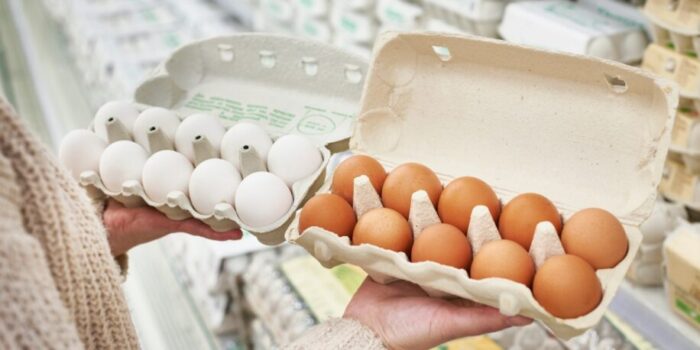
FavorFlav’s Adeline once had a heated argument with her boyfriend in the supermarket. The reason? A carton of eggs. He picked up a carton of white eggs, while she absolutely insisted on brown eggs. Bad news for Adeline: there are fewer and fewer brown eggs to be found in the supermarket. How come?

More people prefer eating brown eggs to white eggs. I can understand Adeline’s obsession with brown eggs too. Somehow, they look better. No wonder, either; in the past, until 2012, brown eggs came from free-range hens, while white eggs came from battery hens. Those hens had a living space the size of a sheet of A4 paper. Battery cages have not been allowed in the European Union since 2012 for good reason. Hence the prevailing idea that brown eggs are better than white eggs.
An outdated idea
By now, that idea — white eggs are bad, brown eggs are good — is a little outdated. It is true that white eggs and brown eggs come from different hens. Hens with white earlobes lay white eggs, while hens with red earlobes lay brown eggs. These days, white eggs are considerably more sustainable than brown eggs. And they are cheaper too. So you would be better off eating white eggs rather than brown eggs anyway, whether or not they are available in the supermarket.
More sustainable and cheaper
Why is that? White hens differ from brown hens not only in color, but also in size. They are smaller than their brown-feathered companions. Smaller hens therefore need far less feed than larger hens. Moreover, white hens lay more eggs than brown hens, and they continue laying for around 10 weeks longer.
Simply put, the farmer can keep white hens for longer. All in all, this means that the production costs associated with white eggs are around 9 percent lower than those for brown eggs. More sustainable and cheaper, then: those white eggs. That is precisely why there are more and more white eggs and fewer brown ones in the supermarket.
Organic eggs
Lidl has not had brown eggs in its stores for quite some time. Albert Heijn is beginning to reduce its range of brown eggs. Can you still tell the difference between eggs in the store? Certainly. Just take a look at the shelves. If all is well, you will see barn eggs, free-range eggs and organic eggs on the shelves. The very best choice is organic eggs. Those hens have the best living conditions and are also given the least antibiotics.
Strange circumstances
But be careful, because as is so often the case, not everything is always as it seems. Food watchdog Foodwatch has already sounded the alarm about the legally protected terms barn, free-range and organic eggs used on packaging. Housing orders issued in response to avian flu have seriously compromised those so-called ‘good living conditions for the animals’, even though such terms and claims were still printed on egg packaging.
It also recently emerged that, despite the ban on battery cages, in recent years we have actually been bringing more battery-cage eggs from Ukraine into our homes. So what is the best thing to do? Keep chickens yourself and eat their eggs? That seems like the most logical solution to us — provided you are not put off by the news that the eggs of backyard chickens may contain PFAS.
Anyway, whether or not you continue eating eggs: at least you now know why there are fewer brown varieties in the supermarket. Now Adeline can only hope she manages to process this news. I will check in on her later.
Also read:
- Eggs: in the fridge or out?
- Strange eggs: can you actually eat them?
- No more eggshells in the pan: this hack for cracking eggs is genius
Sources: Radar, Telegraaf and NOS


