



6 common mistakes when cooking steak
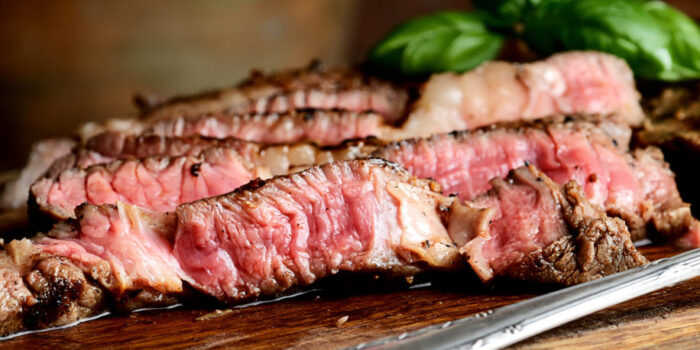
No matter how much cooking experience you have, the moment you slice into a perfectly cooked steak is always a moment of happiness. Do you have no idea what I’m talking about because your steak is always far too well done or still too rare? That could very well be because you’re making one of these mistakes.

One thing you can definitely forget is that the meat needs to be at room temperature. Whaaaaat?! Yes, really, believe me. Cold meat in a hot pan would become tough, but the 20 minutes most recipes recommend for bringing the meat up to temperature make hardly any difference. The end result is roughly the same, both in cooking time and evenness of doneness. Just try it.
Mistake 1: Your steak isn’t dry
It is very important that your meat is thoroughly dry. A dry surface creates the crispiest crust, and that’s what we all want, right? So pat it dry thoroughly with paper towels over the entire surface.
Mistake 2: You don’t let the pan get hot enough
You also need a blazing-hot pan for that brown crust. Open the windows and temporarily switch off the smoke alarm, because this is going to smoke. Make sure the (olive) oil and (clarified) butter in the pan are properly hot, then sear the steak at a higher temperature. Keep the steak moving well. The high temperature of the pan gives you a perfect exterior while the inside stays juicy. It’s best to use a cast-iron skillet for this and let it heat up properly for a few minutes. Tip from my mom: for a deliciously juicy steak, spoon the oil-and-butter fat from the pan over your meat while it cooks.
Mistake 3: You only flip your steak once
Many steak purists will tell you that you should only turn a steak once, to allow the Maillard reaction to take place optimally and ensure even cooking. But according to über-nerd Harold McGee, that isn’t the way to go. By flipping the steak regularly, the other side of the steak never cools down completely and continues cooking slowly. This means the steak is ultimately ready faster and cooked more evenly.
Mistake 4: You don’t use a thermometer
Okay, if you’re a steak master, you naturally know exactly by feel when your steak has reached the perfect level of doneness. But if that were the case, you wouldn’t be reading this article. So always use a meat thermometer; it’s the only way to know for sure what’s going on. Insert the thermometer into the center of the meat. At 52℃ your steak is rare, 55℃ is medium rare, 58 degrees℃ is medium, and well done is 68 degrees℃ (which, as far as I’m concerned, is much too well done). You can use these temperatures for ribeye steak, entrecôte steak, steak, bavette, and flat iron, among others.
Also take carryover cooking into account for every level of doneness once the meat is removed from the heat source. The heat in the outer layers continues to heat the center for a little while, meaning a steak continues cooking by about two degrees in the center. No thermometer at home? For a 100-gram steak the rule of thumb is:
2 – 4 minutes = rare
4 – 6 minutes = medium rare
6 – 8 minutes = well done
Anything beyond that = shoe leather
And then there’s the fleshy part of your hand as a handy tool for checking the doneness of your steak. Touch your thumb and index finger together. Now press the fleshy part of your hand—the area beneath your thumb. It feels soft. That’s how a steak feels when it is rare. When you hold your thumb and middle finger together, there is a little more tension. The fleshy part of your hand now feels medium. And when you touch your thumb and ring finger together, it feels like well done. Now that you know how a properly cooked steak feels, you can check your steak in the pan. Steak master Gordon Ramsay prefers using two fingers on the pulse, which works too.
Mistake 5: You don’t let the steak rest
Do you slice into the steak immediately after cooking? Get ready for meat juices all over your plate. Delicious juices that would have made the steak juicy, if they were still salted inside it. So always let your meat rest on a warm plate covered with aluminum foil, for approximately as long as you cooked it. This also distributes the heat more evenly. All in all, resting results in juicier, more tender meat and helps it retain its flavor.
Mistake 6: You don’t slice your steak properly
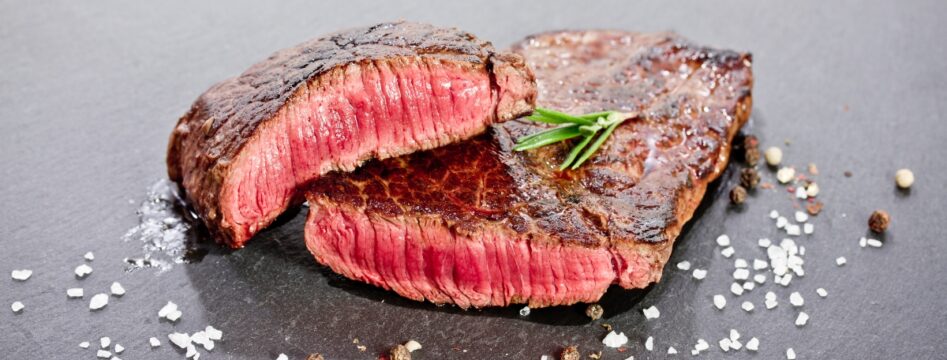
Everything checked? Then don’t forget to slice your perfectly cooked steak properly. Place the meat in front of you and look carefully at the direction of the grooves (muscle fibers). If they run horizontally, cut the meat vertically and vice versa—always against the grain. You’ll notice that the meat is much more tender than when you cut it ‘with the grain’.
And if everything is too much effort and you’re in the mood for a hilarious experiment, try cooking your steak in a toaster.


