



Recipe Rules Demystified
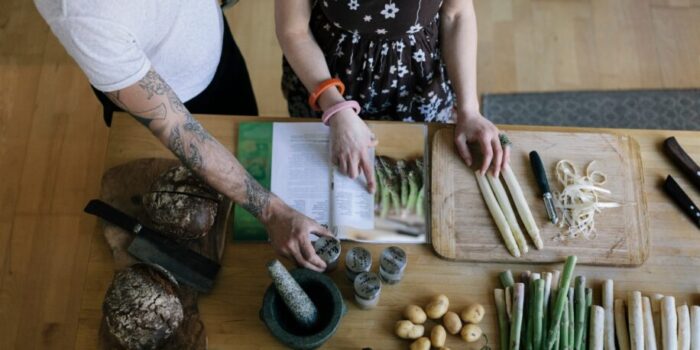
Following recipes is a skill in itself. For starters, you almost always overlook something. On top of that, the quantities or (lack of) instructions often raise a lot of questions. Remember these rules, and tackle every recipe.

To get straight to the point: I read a lot of cookbooks – wonderful, all those new dishes and the stories behind them! – but I hardly ever cook from them. I mainly let them inspire me, which is also what I do when I eat somewhere other than at home. Once I start cooking, I put my own spin on things. And when I do cook from a recipe again, I’m that same donkey who forgets to read ALL the recipe steps before getting started. Which means I first curse the recipe in question while ranting in the kitchen, but afterward mostly curse myself.
Are you someone who does like cooking from recipes? Then the rules below are very handy to remember.
How big is an egg?
Very often, a recipe tells you how many eggs you need, but not how large they should be. These days, you can choose between medium and large almost everywhere. If no size is specified, always use large.
Room temperature
Especially in baking recipes, it often says that certain ingredients need to be at room temperature. Since you usually keep cream cheese, butter and that sort of nonsense in the fridge, I can imagine you thinking: “Is that really necessary?” The answer is yes.
When you mix ingredients that are still cold, they bind together less effectively. That can cause lumps in your batter or, even worse, in your frosting. Eggs at room temperature also gain much more volume than cold eggs. So this is very important when whipping meringue.
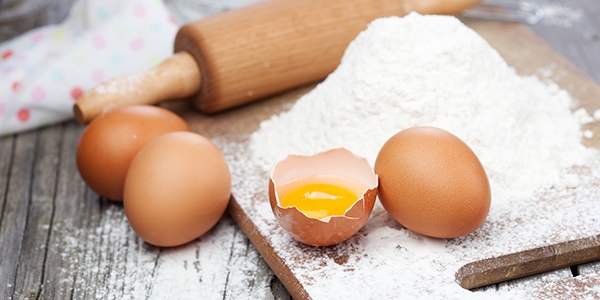
Starting to bake and everything is still in the fridge? Take it out, and after half an hour you can use it all. If you’re really in a hurry, you can cut butter into cubes so it warms up faster.
Spoons
Quantities are often given in tablespoons and teaspoons. Before you reach for your standard coffee spoon, these refer to standard measurements.
You can invest in measuring spoons; they aren’t expensive and are very useful. Don’t feel like doing that? Just use generous tablespoons and teaspoons, and it’ll work out fine.
Finely chopped
The way ingredients are written can also affect the quantity. ‘A tablespoon of almonds, finely chopped’ is different from ‘a tablespoon of finely chopped almonds’.
In the first case, you chop the nuts after measuring them, and in the second case, before. Maybe a small difference, but in some recipes it can make a difference. Especially in pastry, the rule really is: measure twice, bake once!
Cups
You’ve found a delicious recipe online, but suddenly all the ingredients are measured in cups. Cups are American measurements, so the easiest thing is to buy a set.
One cup is approximately 235 milliliters. So when it comes to liquid ingredients, you can easily convert this. For other things – flour, butter, sugar, nuts – Google is your friend. There are countless websites that convert cups to grams. The same goes for sticks of butter and ounces.
A pinch or a splash
A splash of olive oil, a pinch of salt: how much is that exactly? I have good news for you in this category: just go by feel. When a recipe uses a description like this, it usually doesn’t matter that much and is mainly about your personal taste.
Taste to see whether you think it’s seasoned properly, or whether it needs another drop of lemon, some salt or freshly ground pepper. And if it tastes the way you want it to, you’ve done it right!
Also read:


