



From plastic cutting boards to fish: microplastics are everywhere (and your hormones aren’t happy about it)
Honestly: do you ever see a positive message about plastic? The plastic soup seems to be reaching boiling point, there’s all sorts of trouble surrounding that dreadful plastic surcharge and, to top it all off, it turns out there are microplastics in our bodies. We can’t make it any more fun, but we can make it a little worse. Because did you know that those microplastics can seriously disrupt your hormones?

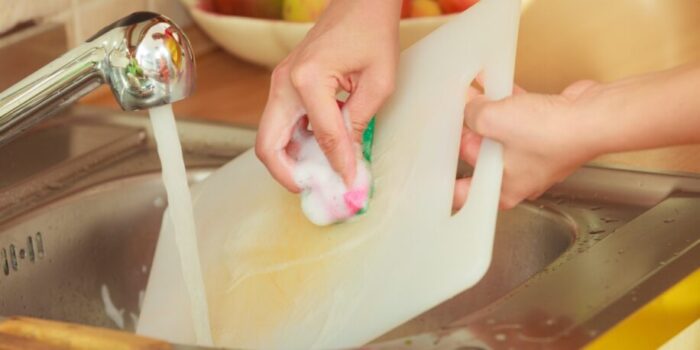
Shocking: every week, we take in the equivalent weight of a credit card in microplastics. Just from cutting on a plastic cutting board, you get the equivalent of two full AA batteries’ worth of microplastics into your body every year. It’s not for nothing that we urge you to throw that filthy thing away as soon as possible. The sad thing is that it’s quite difficult to avoid microplastics completely. Think you’re being healthy with a piece of fish? It contains microplastics. Think you’re doing the right thing by not wasting food? There are microplastics in the plastic container again. And think you’re stepping outside for a breath of fresh air? There are even microplastics in rain!
Harmful BPA
Although a direct link between microplastics and diseases has not yet been established, researchers are concerned about chemicals that attach themselves to microplastics. Those chemicals on microplastics have in fact been proven harmful to us. De Telegraaf spoke with Heather Leslie, who researches this subject at Vrije Universiteit. She explains that harmful chemicals attach themselves very easily to microplastics in the environment. BPA in particular is a worrying substance. Majorie van Duursen, professor of toxicology at Vrije Universiteit Amsterdam, told De Telegraaf that excessive exposure to BPA is harmful to the liver, kidneys and fertility. It’s not for nothing that it has been banned in many products—especially those intended for young children. But yes, BPA is still found in plenty of products. And if you add all of that up… It’s not surprising that your hormones become seriously disrupted.
Living plastic-free
Every year, we take in approximately 22 million microplastics. 22 million! Doesn’t that immediately make you want to live radically plastic-free? To furiously sweep through all your cupboards and drawers and throw out anything that even faintly smells of plastic? Journalist Heleen van Lier of De Telegraaf felt this way too. For a while, she tried to live as plastic-free as possible. She replaced products full of plastic with natural and/or reusable alternatives. So no more plastic cutting boards or containers, and no cosmetics bursting with microplastics either. Plus: taking your own cotton bag to the bakery and supermarket.
Mission impossible
Doing well? Absolutely. Still, the plastic-free plan was unsustainable. Just try paying € 25 for a plastic-free alternative when the plastic product itself costs less than € 5. And that goes for all the plastic items in your home… Also bear in mind that it’s actually impossible to avoid plastic 100% in your life. Plastic is EVERYWHERE. Simply sitting down on a chair releases a thick cloud of plastic. So there’s plastic in rain too. And in our food. From fish to honey and from beer to sea salt, you can’t escape microplastics.
On top of that, replacing plastic isn’t always the most environmentally friendly option. As stated in the De Telegraaf article, the Austrian sustainability consultancy Denkstatt outlined a scenario in which all plastics in the world were replaced. The result? It would double energy consumption and greenhouse gas emissions. And then you’d have a completely different problem on your hands.
Reuse, don’t throw away
The solution? Keep looking for plastic-free alternatives, wherever possible. But do what is within your power. You can easily replace that plastic cutting board with a wooden one. You could also consider choosing more natural products, such as eco-friendly cleaning products. It’s also smart to ventilate your home properly and be careful if you have a product with a very strong plastic smell. The latter is never a good sign. Do you still have something made of plastic? Then see it as a reusable item rather than a disposable product. You’ll be doing nature a favour too!
Also read:
- What’s better for the environment: plastic cling film or aluminium foil?
- 10 completely nonsensical plastic supermarket packages
- The plastic surcharge: how it works in supermarkets
Sources: De Telegraaf, National Geographic, GFC Nieuws


