



Renovating your kitchen? Read these 6 tips!
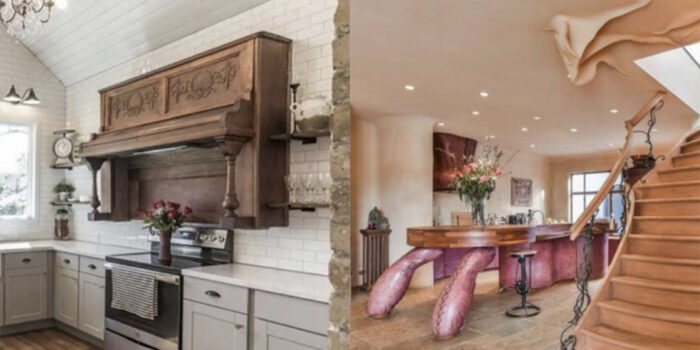
Some lucky people have the luxury of choosing a kitchen and having it installed or renovated entirely according to their wishes. Most people have to make do with the kitchen left behind by the previous occupant, and gradually try to make the space their own. If you’re facing a renovation, you’ve probably already done some research, but do read these tips first.

I know a stylist who has a very distinctive approach to kitchen renovations: she simply has everything ripped out and replaced with a walk-in (clothing) closet, with a little electric hot plate somewhere in a forgotten corner of the house for emergencies. And a beautiful fridge for the ever-present bottles of champagne. Now that’s self-knowledge. If you know you’re never going to cook but always order takeout or delivery, why would you do anything else? But for people (like us) who really do love cooking, here are a few things to avoid:
Renovating your kitchen? Read these 6 tips!
Poor lighting
What you really don’t want is insufficient light when you’re handling the mandoline, or tackling a clove of garlic with your neatly sharpened good knife. Make a lighting plan so all electrical points and switches can be taken into account during construction, and make sure there are enough spotlights to illuminate the work surfaces. This is functional lighting. Also provide good general lighting, as well as pleasant mood lighting and accents on things you like, such as plants or your cookbook collection.
Insufficient ventilation
That chicken with forty cloves of garlic smells delicious, but the next day you should be able to have your kitchen smell neutral again. Good ventilation is an absolute must, not only because not everyone at work needs to know what was on the menu yesterday, but primarily so you can cook safely. You don’t want fine particles and combustion gases lingering for long, so make sure you have a good extractor hood that is larger than the stove or cooktop and, whenever possible, open a window too.
Too little workspace
I’m quite guilty of collecting large jars and bottles on the countertop, which I then half-heartedly push together in a corner. That costs an enormous amount of workspace, what with my four types of oil, three types of salt and a large preserving jar each for dried pasta, rice, oats and quinoa (God, I sound healthy—don’t worry, I’m not that healthy). Add two sinks, a toaster, a bread bin, the blender, the food processor and the espresso machine, and honestly it’s a miracle I don’t just sit on the sofa with a cutting board. Bear this in mind if you have the luxury of choosing a little more countertop space! Incidentally, the mess on my own countertop is mainly caused by the following point:
Too little storage space
Or too many things, but I’ll leave that aside for now. I love cooking so much and so often that I really do need/use everything in my kitchen (or so I think), but make sure you don’t make the mistake of going for a lovely minimalist design with one little shelf on the wall because it looks so clean and hip, when what you actually need is cabinet space to store all your stuff. Think in advance about which kitchen appliances you actually use often so you can easily access them on the countertop, and try to keep the rest as clear as possible. That means factoring in which/how many cabinets you need to fit everything into.
Wanting an island
It remains a kind of holy grail: one day owning a beautiful kitchen/cooking island on and around which you can fully indulge your inner Martha Stewart. But put simply: if it can’t be done, it can’t be done. Kitchen designers advise keeping 1.20 m of space around the entire island; otherwise you’ll really get in the way of your own walking routes. The most important thing in terms of space is maintaining a good workflow, and ensuring that an island in the middle doesn’t obstruct you when you want to walk from the fridge to the stove or head toward the sink.
Ignoring waste disposal points
A smooth workflow definitely includes waste disposal points: space for the trash bin and, in most cases, a place to collect recyclables such as glass, paper and plastic. If you first have to open an entire cabinet or go to the balcony, and then need both hands to yank the lid off the bin while trying to dispose of a wad of grease-leaking aluminum foil before it drips all over your floor, something in your kitchen design could probably have been done better. According to FavorFlav’s Sharon, who has just completed a kitchen renovation, such a little built-in trash bin is a really bad idea..
And of course, in most cases you have to work with the materials you’re given, but for all the points above, the rule is: if you’re ever lucky enough to be able to design and build it all yourself (or have it done), get it right the first time. You’ll enjoy cooking there for years to come.
Also read:
- 7 tips for cooking safely
- 13 times these people should never be allowed in the kitchen again
- 7 kitchen hacks that make absolutely no sense


