



Lactose-intolerant? You can eat these 10 cheeses

We’ve long since come to the conclusion: cheese is the most delicious food in the world. So lactose intolerance sounds like a huge nightmare to us. Eating cheese and getting a stomach ache?! We can’t even bear to think about it. But guess what? Lactose intolerance doesn’t have to mean the end of your love of cheese. Some cheeses are perfectly fine to eat if you’re lactose-intolerant. We’ll tell you which cheeses are suitable and share handy tips to help you make the right choice.

Yep, among the thousands of types of cheese on the shelves, there are several cheeses you can eat even if you’re lactose-intolerant. Without getting stomach cramps, a bloated belly or a fart attack. Fantastic news, right?
Lactose intolerance: no fun
Lactose is milk sugar. Your body needs to digest it. For this, it needs lactase: an enzyme produced in the wall of the small intestine. Does your body not produce this enzyme, or not enough of it? Then lactose reaches your large intestine undigested. The bacteria in your large intestine then ferment the lactose. This can cause symptoms such as stomach pain, bloating and flatulence. In this case, you’re lactose-intolerant.
The older the cheese, the better the choice
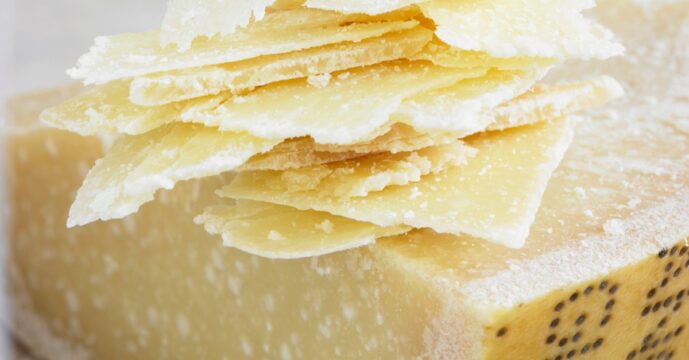
So what about cheese? It’s made from milk, isn’t it, and milk contains lactose, right? In principle, yes. But when cheeses mature for a long time, they contain (almost) no lactose. This is because added lactic acid bacteria break down the lactose during the maturation process. The longer the cheese matures, the more lactose is broken down. What does that mean? Mainly older and semi-hard or hard cheeses such as Gouda, Parmesan and Emmental contain little to no lactose. Great!
Soft cheeses can work too
What if you don’t like hard cheeses? Are you out of luck? No, because you don’t have to avoid all soft cheeses if you’re lactose-intolerant. You too can enjoy, for example, a piece of brie or camembert. These contain mould cultures that break down some of the lactose in the cheese.
More types of cheese that can go on your lactose-friendly list are goat’s cheese and sheep’s cheese. They naturally contain less lactose than cheeses made from cow’s milk. The older these cheeses are, the less lactose they contain.
10 cheeses you can eat if you’re lactose-intolerant
1. (Aged) Gouda
2. Parmesan
3. Cheddar
4. Emmental
5. Gruyère
6. Brie
7. Camembert
8. Gorgonzola
9. (Aged) goat’s cheese
10. Manchego
Cheeses you’re better off avoiding
Mozzarella and ricotta are less sensible choices. These cheeses contain a high concentration of lactose. Mozzarella, for example, is a cheese that doesn’t need to mature; in other words, it contains a lot of lactose. Also bear in mind that cheeses such as brie, camembert, goat’s cheese and sheep’s cheese are low in lactose, but not 100% lactose-free. If these cheeses are only briefly matured, their lactose content is higher. So choose a more mature brie or older goat’s cheese instead.
Lactose-free cheese options
For those who want to avoid lactose completely, lactose-free versions of familiar cheeses such as mozzarella, cheddar and cream cheese are available. Are you unsure whether you can eat a particular cheese? As a rule, hard Dutch cheese is lactose-free, while with other cheeses it depends on how intolerant you are. Speciality cheese shops can help you find cheeses that contain little to no lactose. Start with small amounts to see how your body reacts.
In any case, check the packaging. Lactose is milk sugar, which falls under carbohydrates. If there are fewer than 5 grams of carbohydrates/sugars per 100 grams of cheese, you can consider it a low-lactose cheese. Obviously, the lower the number, the better.
Now that you know which cheeses you can eat if you’re lactose-intolerant, which one will you bring home first?
Also read:
- Mouldy cheese on your toasted sandwich—is that dangerous?
- Cheese according to your zodiac sign
- You don’t have an allergy, you’re just being a pain
Sources: lactosefree.nl, 24Kitchen, mlds.nl, delekkerstekaas.nl


